

If you are a freelancer trying to grow your client base, social media management is no longer optional.
It is the engine behind how clients find you, trust you, and hire you.
Whether you are a graphic designer, copywriter, virtual assistant, or consultant — the platforms you show up on, and how you show up, decide whether leads come to you or go to someone else.
This guide covers exactly what it means, what it involves, and why freelancers who take it seriously grow faster.
What Exactly Is Social Media Management?
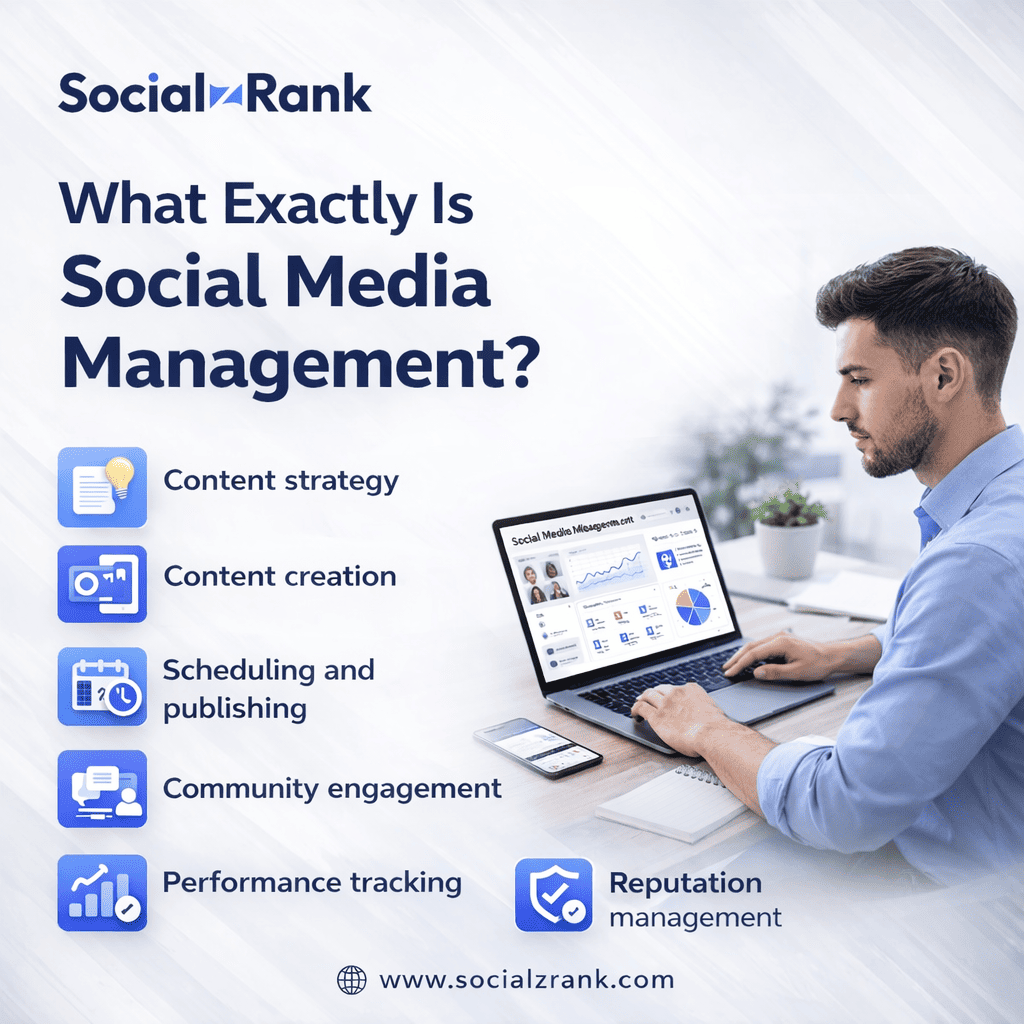
At its core, social media management is the process of planning, creating, publishing, and analyzing content across social platforms, with the goal of building a consistent and credible online presence.
But it goes deeper than just posting. It includes:
- Content strategy: Deciding what to say, when, and on which platforms
- Content creation: Writing captions, designing visuals, recording short-form videos
- Scheduling and publishing: Posting at the right times using tools like Buffer or Hootsuite
- Community engagement: Replying to comments, DMs, and mentions
- Performance tracking: Reading analytics to see what works and what does not
- Reputation management: Monitoring what people say about you online
For freelancers, this means managing your own brand presence and potentially offering it as a paid service to clients.
That makes it both a career tool and a direct revenue stream.
The State of Social Media in 2025: Why This Matters Now
The numbers are hard to ignore.
As of October 2025, 68.7% of the world’s population are social media users; that is, 5.66 billion user identities globally.
People are not passively scrolling either. The average person spends 2 hours and 20 minutes per day on social platforms.
Your potential clients are on these platforms every single day. They are searching for service providers, checking profiles for credibility signals, and making hiring decisions based on what they see — or do not see.
Consider this:
- 93% of marketers say social media has been crucial for business growth
- Social media ad spend hit $247.3 billion in 2024 — a 14.3% increase year-over-year
- Businesses need skilled people to manage that investment
That is the gap freelancers can fill — both for their own growth and as a paid service.
Why Freelancers Need to Take Social Media Seriously
1. Your Profile Is Your Portfolio
When a prospective client finds you online, your profile is the first thing they judge.
If it is inactive, inconsistent, or absent, they move on.
A well-managed LinkedIn signals professionalism. A consistent Instagram with work samples shows execution. An X (Twitter) account with regular insights builds thought leadership.
Together, they build the kind of trust that a cold pitch email simply cannot.
2. Social Media Is the Top Way Freelancers Get Clients
Networking is still the number one way independent workers land new business.
And in 2025, networking happens largely online through posts, comments, DMs, and LinkedIn connections.
If you are not active, you are invisible to this entire pipeline.
Showing up consistently means you are always networking, even when you are not actively looking for work.
3. Social Media Management Is the Most In-Demand Freelance Marketing Skill
Here is what most freelancers overlook: this is not just a tool for your own brand; it is one of the most sellable skills in the freelance market.
The numbers:
- Social media marketing is the #1 most in-demand freelance marketing expertise
- Freelance social media managers earn $40–$60/hour currently
- Mid-level managers (2–4 years) charge $35–$75/hour
- Premium monthly retainers go from $3,000 to $7,000+/month
That is a real income opportunity, and it compounds with experience.
What Does Day-to-Day Social Media Management Look Like?
Many freelancers think managing social media just means posting every few days. It does not.
Here is what a structured weekly workflow actually looks like:
Week 1 — Strategy and Planning: Map out the content calendar. Define your content pillars — the recurring themes that match your brand and audience. For a freelance developer, this might be client wins, tech tips, and tool breakdowns.
Week 2–4 — Creation and Scheduling Batch-produce your content — captions, graphics, short videos — and schedule them in advance.
This way, you are not scrambling daily. Your output stays consistent even during busy client weeks.
Daily — Engagement and Monitoring: Check comments and DMs. Respond to anyone who engaged with your content.
This is where relationships form. Algorithms also reward active accounts — so this step directly affects your reach.
Monthly — Analytics Review: Look at what performed and what did not. Which posts drove profile visits? Which ones led to DM inquiries?
Adjust next month’s plan based on data, not instinct.
How Social Media Management Builds Your Long-Term Freelance Business
Consistent Visibility Compounds Over Time
Unlike paid ads — which stop working the moment you stop paying — organic content builds over time.
A strong post from six months ago can still bring you followers today. A LinkedIn article can keep surfacing in searches for years.
This is why consistency beats virality. You do not need one viral post. You need 50 solid posts that collectively build your reputation.
It Shortens Your Sales Cycle
When a warm lead reaches out after seeing your content for weeks, they already know the following:
- What you do
- How you think
- What results do you deliver
The conversation shifts from “prove your worth” to “when can we start?”
That is the difference between cold outreach and inbound leads.
It Builds Authority in Your Niche
Generalist freelancers compete on price. Specialists compete on value.
Social platforms let you demonstrate expertise publicly and consistently, which is the clearest path to positioning yourself as a specialist.
A freelance copywriter who shares landing page breakdowns every week will attract clients who value quality – and pay for it.
The content does the qualifying before you ever speak to anyone.
Tools That Make Social Media Management Efficient
You do not need to spend hours every day to manage social media effectively.
| Tool | What It Does |
| Buffer / Hootsuite | Schedule posts across multiple platforms |
| Canva | Create professional graphics quickly |
| Later | Visual content calendar, great for Instagram |
| Metricool | Cross-platform analytics + scheduling |
| Notion / Trello | Plan and organize your content calendar |
| ChatGPT / Claude | Draft captions, hooks, and ideas fast |
Realistic time commitment:
- 2–3 hours/week for content creation and scheduling
- 10–15 minutes/day for engagement
That is it. Manageable — with a high return.
Common Mistakes Freelancers Make on Social Media
Posting Without a Strategy
Posting random content whenever inspiration strikes is noise — not strategy.
Without clear content pillars and a defined audience, your posts will not attract the right clients. Define who you are trying to reach before you publish anything.
Being on Too Many Platforms at Once
You do not need to be everywhere.
Pick one or two platforms where your ideal clients are active and do those well.
- B2B consultants → LinkedIn, not TikTok
- Photographers → Instagram and Pinterest
- Tech freelancers → LinkedIn and X
Platform choice should follow your audience, not trends.
Treating It as a One-Way Broadcast
Posting and never responding to comments or DMs is like setting up a booth at a trade show and staring at your phone.
Engagement is where relationships form. Relationships convert.
Inconsistency
An account that posts ten times one week and disappears for a month sends one signal to potential clients: unreliable.
Consistency is not about volume. Three posts a week, every week, beats ten posts followed by silence.
Should Freelancers Offer Social Media Management as a Service?
If you already understand platforms, content creation, and analytics — offering this as a service is a logical next step.
The market is large and growing fast.
The U.S. freelance workforce grew from 59 million in 2019 to 64 million in 2023, and Statista projects it will hit 90.1 million by 2028. More freelancers means more businesses looking for help managing their online presence.
If you want to build this skill or offer it to clients, start with SocialzRank’s affordable social media management services for freelancers — a detailed resource on how to approach this practically.
You can also explore SocialzRank’s all services if you want professional support without burning out your own bandwidth.
How to Get Started — A Simple 5-Step Plan
No tools required. No major time investment upfront.
Step 1 — Audit your existing profiles. Google yourself. Check every platform where you have a presence.
Check if your bio is clear? Make sure your profile photo looks professional? Also, see whether your last post is older than a month? Fix the obvious gaps first.
Step 2 — Pick one platform and go deep. Choose where your ideal clients are most active. Commit to posting 3x per week for 60 days.
Do not jump to a second platform until the first one is producing results.
Step 3 — Define three content pillars. These are your recurring topics. For most freelancers:
- Your process and expertise
- Client results and case studies
- Industry insights or education
Rotate through them. Keep content varied but focused.
Step 4 — Block weekly content time. Set two hours every week specifically for content creation and scheduling.
Treat it like a client meeting – non-negotiable.
Step 5 — Track what works. After 30 days, check your analytics.
Which posts got the most reach? Which drove DM inquiries? Do more of what worked. Cut what did not.
Conclusion
Social media management is not a nice-to-have for freelancers.
It is the foundation of a sustainable, independent career.
This approach shapes how clients find you, how they perceive your brand, and ultimately whether they choose to hire you. In addition, social media management is one of the most in-demand and well-compensated services you can offer to your own clients.
The freelancers who build a consistent, strategic presence are the ones who stop chasing work and start attracting it.
Start with one platform. One clear message. One consistent week.