
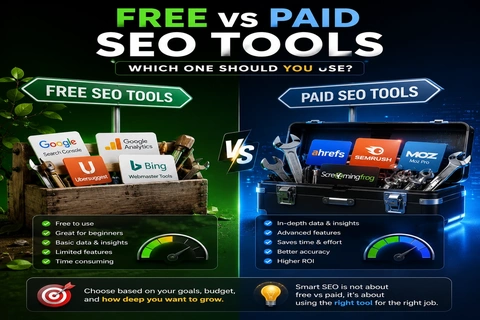

Relying blindly on a collection of arbitrary software utilities to guide your search engine marketing is an excellent way to throw away your expansion budget. Many technical founders assume that paying a steep monthly premium for enterprise software is a luxury they can defer, choosing instead to patch their workflows together with entry-level dashboards. However, managing an optimization strategy without understanding the structural limits of your testing gear will compromise your entire content pipeline.
Choosing the correct collection of marketing or paid and free SEO tools in the USA requires analyzing data refresh speeds, structural limitations, and API connectivity to confirm you are building your digital asset on verified search intelligence.
Businesses should first grasp how keyword research, technical SEO, content optimisation, local SEO and authority building all work together before choosing an SEO solution. Our Complete Guide to SEO for USA Businesses (2026) describes the full SEO strategy that supports long-term organic growth.
Technical Performance Dimensions You Must Evaluate
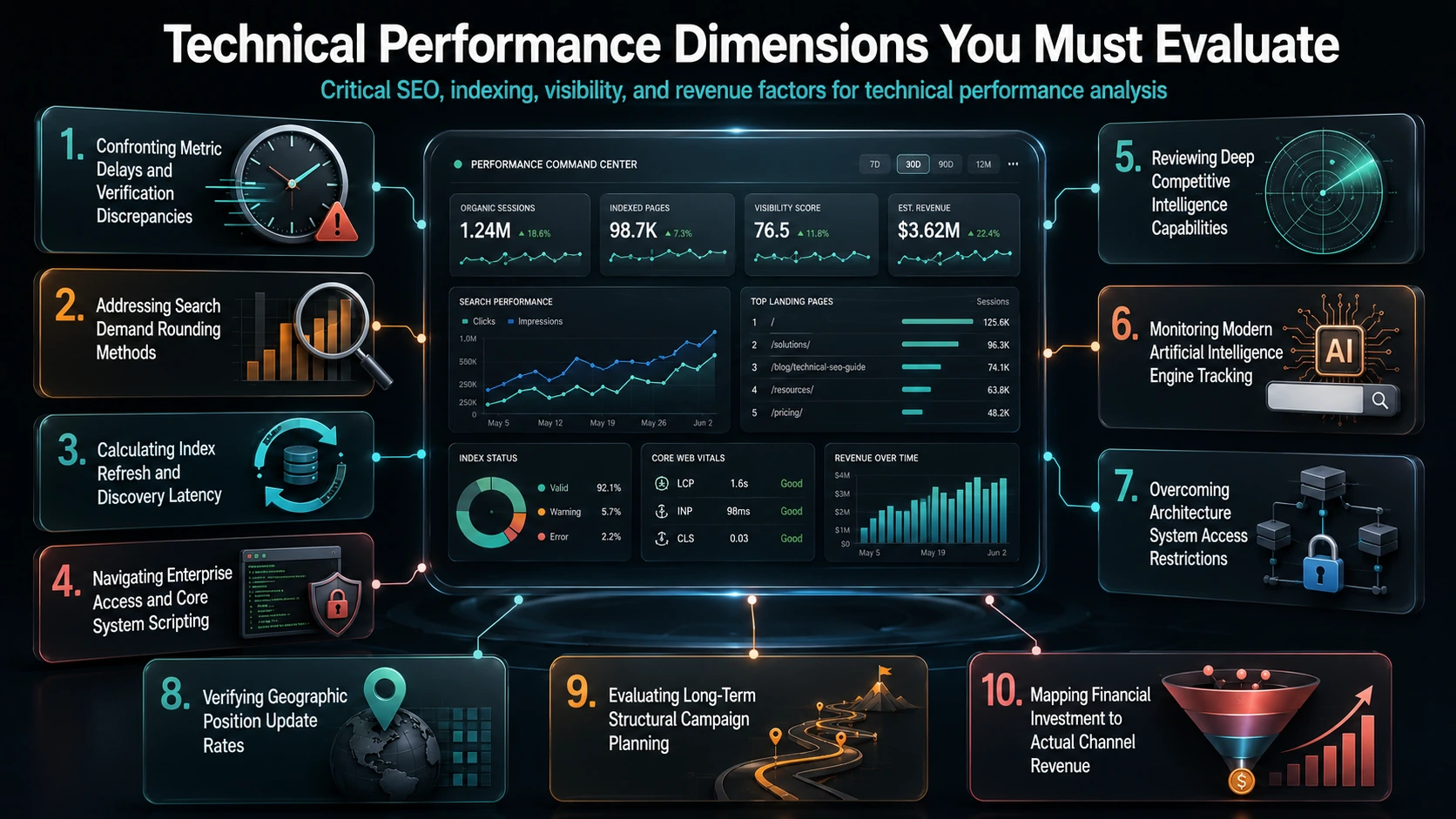
1. Confronting Metric Delays and Verification Discrepancies
Operating an expansion strategy using entry-level scrapers introduces immediate data accuracy gaps that distort your strategic planning. Free tracking applications often parse information through sluggish, generalized data hubs, which means the competitive keyword metrics or search volumes you are reviewing could be months out of date.
Premium data engines bypass these severe data accuracy gaps by querying massive database grids around the clock, providing clear, real-time feedback on seasonal traffic shifts and immediate layout performance.
2. Addressing Search Demand Rounding Methods
Product testing data reveals that using premium enterprise software to bypass rough keyword volume sampling uncovers up to 40% more long-tail keyword variations with precise, unrounded monthly search totals.
Relying on basic search engines for keyword research frequently limits your team to broad keyword volume sampling models that obscure high-intent target queries. Entry-level keyword tools group entirely unique search phrases into massive, rounded bucket averages, making a niche commercial query appear identical to a broad informational search.
3. Calculating Index Refresh and Discovery Latency
Building a strong organic footprint requires tracking incoming links as they occur, a task that demands intense backlink index velocity. Free backlink checking utilities operate on incredibly slow crawling schedules, often taking weeks to display a new corporate referral link or completely missing a toxic algorithmic link drop.
Premium database providers possess an elite backlink index velocity that flags structural link modifications in real time, giving your team the power to react to competitive link movements before they impact your live domain strength.
4. Navigating Enterprise Access and Core System Scripting
If your technical team wants to automate manual reporting by connecting data directly to custom corporate dashboards, free software quickly falls short. Entry-level accounts do not support any advanced API programmatic extraction, forcing your data analysts to spend hours manually downloading CSV files every week.
Investing in top-tier platforms unlocks extensive API programmatic extraction paths, letting your engineers script automated custom scrapers that pipe pristine keyword positioning metrics directly into your company database.
5. Reviewing Deep Competitive Intelligence Capabilities
Basic search software can display your own direct metrics, but it completely stumbles when attempting to isolate competitor gap insights. Free web utilities cannot reconstruct the complete architectural ranking history of a rival software product or isolate the exact content pieces driving their commercial revenue.
Premium platforms specialize in mapping these competitor gap insights, allowing you to instantly compare your layout against five rival URLs to uncover high-value search terms your team completely missed. SEO tools can tell you what’s possible, but a comprehensive SEO strategy is generally best done by experienced specialists that know how to transform data into real success with dedicated SEO services for businesses.
6. Monitoring Modern Artificial Intelligence Engine Tracking
Traditional search queries are shifting rapidly toward generative AI summaries, making it vital to monitor your AEO visibility metrics closely.
AI search visibility is not tracked by standard web tools. You may not know if your software product is part of conversational answers. They also could not appear in AI search summaries with citations. Premium analytics frameworks overcome this problem with dedicated AEO modules. These modules let you track your visibility in AI-powered results. They also help shape your content architecture. Getting citations in huge language model answers is easier. As AI-powered search continues to evolve, organisations need a modern SEO strategy that marries traditional ranking considerations with Answer Engine Optimisation, or AEO. Find out more in our USA SEO strategy guide for 2026.
7. Overcoming Architecture System Access Restrictions
A complete examination of an enterprise application can easily hit crawl restrictions. It is not uncommon for sites with tens of thousands of landing pages. This is a scale that open-access systems generally struggle with. Free web crawlers generally crawl only hundreds of URLs every project. So, product folders deeper than this may be unchecked. Major layout problems can remain unseen until they start to harm SEO performance.
These crawl limit bottlenecks are eliminated by premium site assessment solutions. Your development team can crawl big datasets with ease. The instruments can scan millions of cells of databases. They also make broken scripts easier to find. It makes it easy to spot and correct duplicate content loops.
8. Verifying Geographic Position Update Rates
Evaluating search authority across different regions requires absolute rank tracking precision to confirm your local marketing is converting.
Free tracking apps provide generalized global performance averages that gloss over real regional visibility drops. Premium platforms offer precise rank tracking. They provide automated daily keyword updates for specific zip codes. They can also segment results by mobile device profiles. This helps you measure international search visibility more accurately.
9. Evaluating Long-Term Structural Campaign Planning
Predicting where your industry is moving requires looking back at years of user behavior data to decode historical search trends. Free digital tools restrict your visual dashboard views to a tight window of a few months, completely blinding you to cyclical market swings.
Recent optimization analytics show that utilizing premium platforms to analyze multi-year historical search trends allows software brands to map out high-performing content frameworks up to six months before seasonal demand spikes occur.
10. Mapping Financial Investment to Actual Channel Revenue
Connecting your organic optimization costs back to actual customer signups requires precise SEO tool attribution frameworks.
Free diagnostic platforms work separately from your CRM. This makes it hard to see which articles bring real subscription revenue. You end up guessing instead of tracking clear results. Premium data setups solve this with advanced conversion tags. They also use SEO tool attribution parameters inside your marketing funnels. This shows the financial path from an organic search click to a paid account renewal.
The Universal Open-Access Group (5 Free SEO Tools USA)
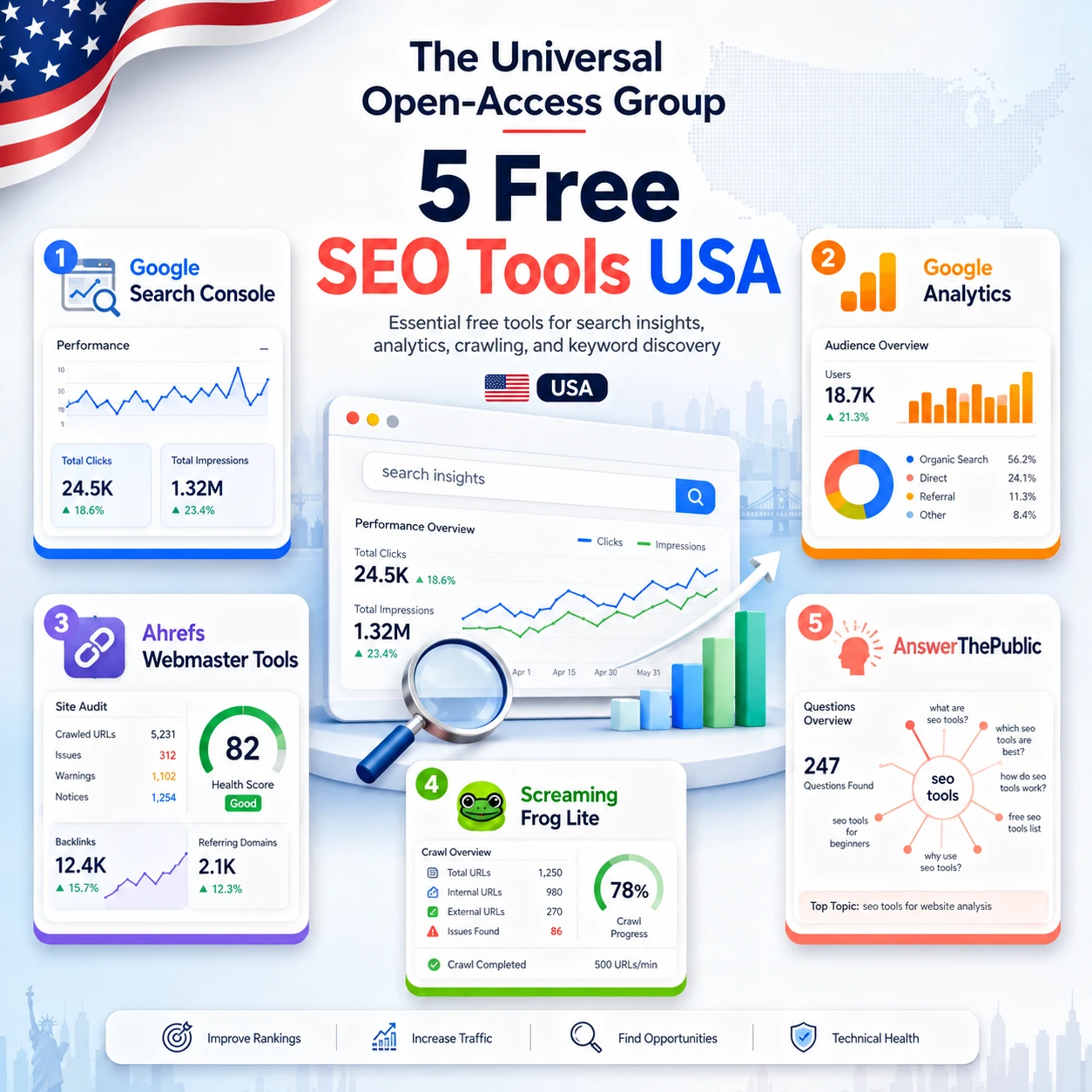
- Google Search Console: The ultimate baseline authority for performance tracking, offering direct, raw click and impression indicators fresh from the primary search engine without any commercial data filters.
- Google Analytics: A massive corporate data engine that tracks complete user paths, custom events, and on-site behavior patterns across your software application at zero financial cost.
- Ahrefs Webmaster Tools: A generous open-access diagnostic layer that allows verified site owners to run limited, 5,000-credit monthly technical workspace crawls and monitor their top 1,000 backlink footprints.
- Screaming Frog Lite: A powerful, local desktop application crawler that lets engineering teams thoroughly audit up to 500 individual URLs per session to identify broken links, redirect loops, and missing meta elements.
- AnswerThePublic: A highly visual search listening utility that scrapes real-time query configurations directly from autocomplete engines, giving content creators instant access to raw consumer questions.
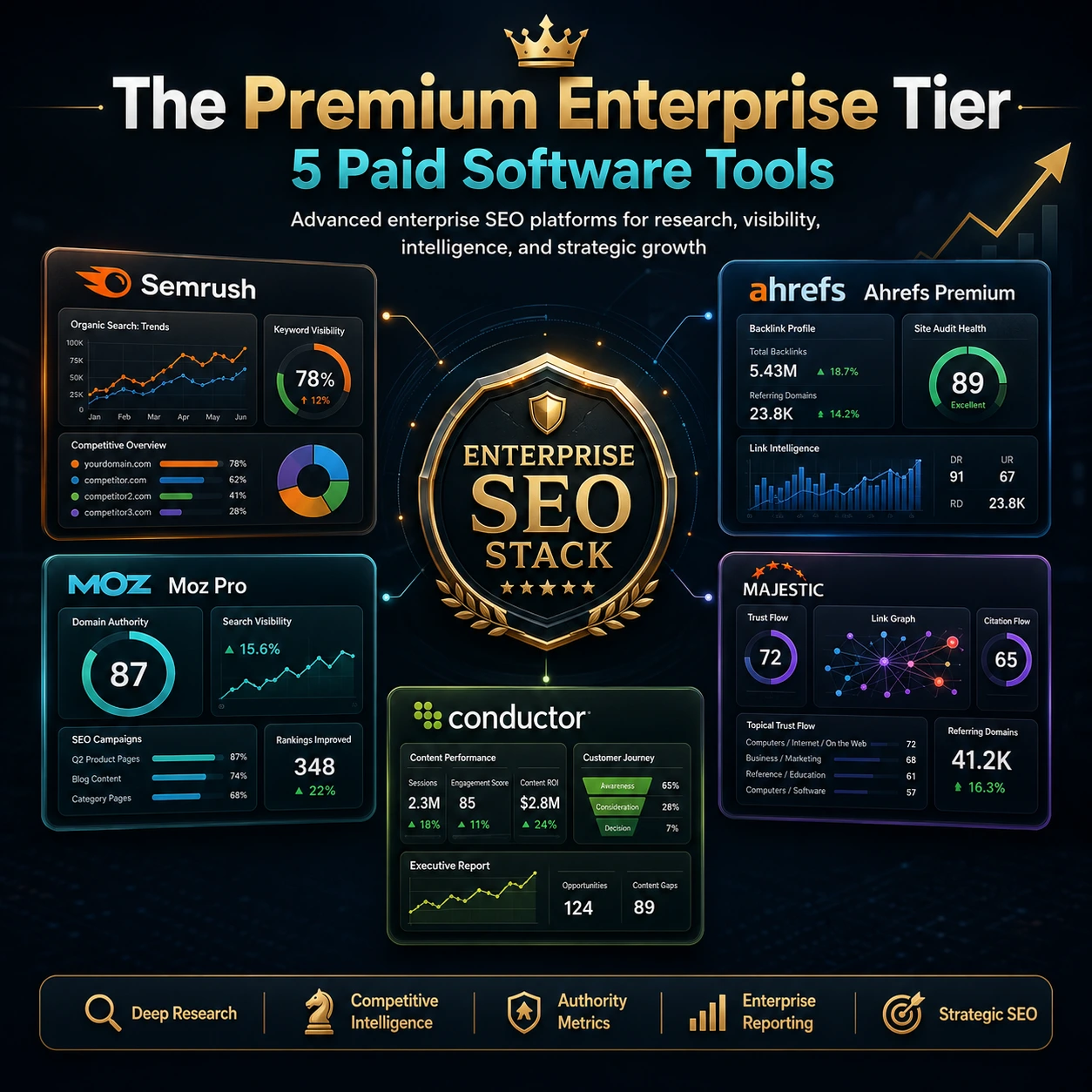
The Premium Enterprise Tier (5 Paid Software Tools)
-
-
- Semrush: A comprehensive, all-in-one search intelligence suite featuring extensive competitive tracking modules, global database historical views, and massive keyword expansion tools.
- Ahrefs Premium: Ahrefs Premium is the gold standard for backlink index depth and keyword research. Its powerful crawling infrastructure updates search engine results data around the clock.
- Moz Pro: A highly reliable enterprise platform famous for its stable proprietary domain authority modeling, structured page optimization recommendations, and clean local tracking systems.
- Majestic: A deeply specialized backlink mapping engine that categorizes visual web networks using custom trust and citation metrics to reveal true link quality across competitive niches.
- Conductor: An advanced corporate enterprise solution built for massive global brands, focusing on automated content brief generation, deep market share forecasting, and complex team workflow setups.
- Semrush: A comprehensive, all-in-one search intelligence suite featuring extensive competitive tracking modules, global database historical views, and massive keyword expansion tools.
-
Stop Guessing on Web Authority and Control Your Analytics Infrastructure
Relying on basic search engines for your data is an expensive way to guide an enterprise software campaign. If your marketing team spends half their week downloading separate CSV files, guessing at rounded search metrics, and hitting hard system caps, your growth engine is broken.
But free tools are good for first baseline checks. But a stronger data infrastructure is needed to scale beyond early traction. Tools offer you data. Strategy offers you results. If you want to boost your rankings, traffic and conversions then you should start with our Complete Guide to SEO for Businesses in the USA (2026) to learn the entire SEO process from planning to implementation. Premium search utilities will organise and predict optimisation. They help to take the guessing out of it. Real-time analytics allows you to manage your application layout and landing pages and content networks faster. You stop pursuing weak search trends and start focusing on real market growth.
SocialzRank is the tactical growth engine that builds high-performing organic pipelines for fast-growing digital brands. We don’t waste your time with bloated vanity metrics or decorative PDF reports that don’t tie back to actual enterprise revenue.
Frequently Ask Questions
Early startups should maximize free options like Google Search Console for direct data, then invest in premium tiers once they need to analyze competitor gaps and scale content production.
Sluggish data updates mean you risk spending valuable development hours optimizing for dead search trends or missing competitive backlink drops as they happen.
No, bypassing strict crawl limits on large application sites requires premium access to run deep, site-wide technical health checks.
Rounded search volume averages mask valuable, low-volume commercial phrases, causing teams to waste effort on generic terms instead of high-conversion keywords.
Fast indexing lets you track your PR referral links and guest placements instantly, allowing you to measure the immediate impact of your launch campaigns.
It automates the painful process of collecting and merging data manually, freeing up your technical staff to focus on real strategy and execution.
As search habits evolve, tracking your presence in conversational answers ensures your product remains highly visible inside AI-generated summaries.
It gives you hyper-local keyword data down to specific cities, ensuring your regional marketing campaigns are reaching the right target audiences.