

Building a beautiful digital storefront means absolutely nothing if your prospective customers cannot find you online. Many business owners launch a new domain, publish a few basic informational pages, and wonder why their analytics dashboards show absolutely no organic visits.
Facing a massive website not ranking Google visibility crisis is incredibly frustrating, especially when you are putting effort into creating content. If your platform is hidden on page five or six of search result directories, it is almost always caused by a severe technical bottleneck, a system crawling block, or a mismatch in user expectations. Fixing this problem requires diagnosing the concrete technical issues that are actively preventing search crawlers from reading your database layers.
Read our complete guide to SEO for businesses in the USA in 2026 to understand how these factors work together.
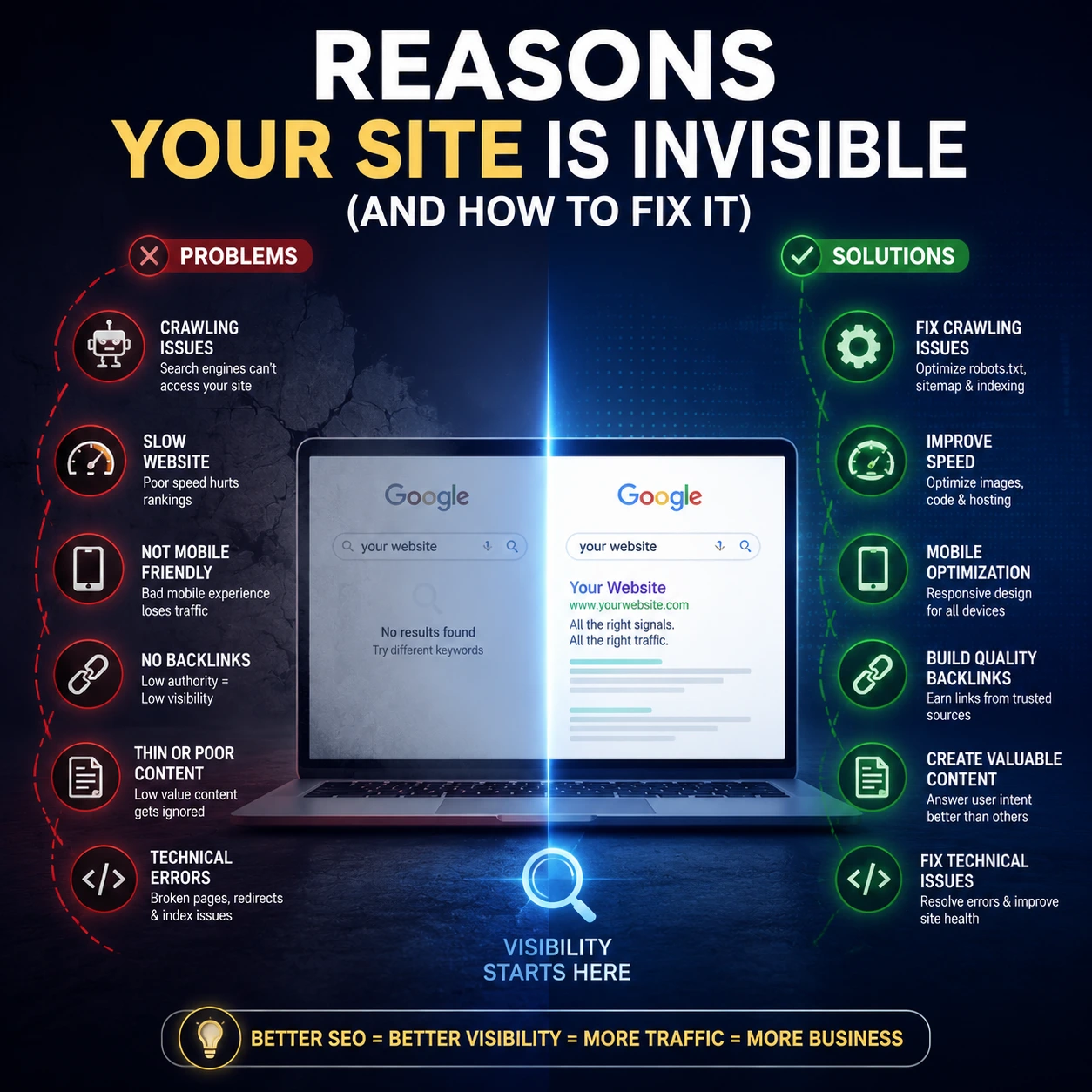
Reasons Your Site Is Invisible (And How to Fix It)
You Are Accidentally Blocking Search Crawlers
The most common reason for a sudden drop in visibility is hidden within your baseline platform settings. If your system file contains a misconfigured command, search bots are strictly prohibited from evaluating your layout. This completely cuts off your digital footprint from being added to the global web directory.
Quick Solution
Go directly into your root directory and inspect your robots.txt file. Make sure you do not see a line that says Disallow: / on your primary public pages. Run a comprehensive website SEO audit to verify that no hidden “noindex” tags are sitting inside your frontend header code.
Search Engines Do Not Know Your Assets Exist
If you recently launched a brand-new domain or added a collection of service pages, search networks might simply be unaware of the changes. Without a direct data link connecting your platform to primary web indexing databases, discovery speeds drop significantly.
Quick Solution
Log in to your administrative web profile and look for Google indexing issues within your control panels. Generate a clean XML sitemap using your CMS, paste that specific file link into the system tracker, and click submit to trigger a fresh evaluation pass.
Crucial System Notification Windows Are Full of Warnings
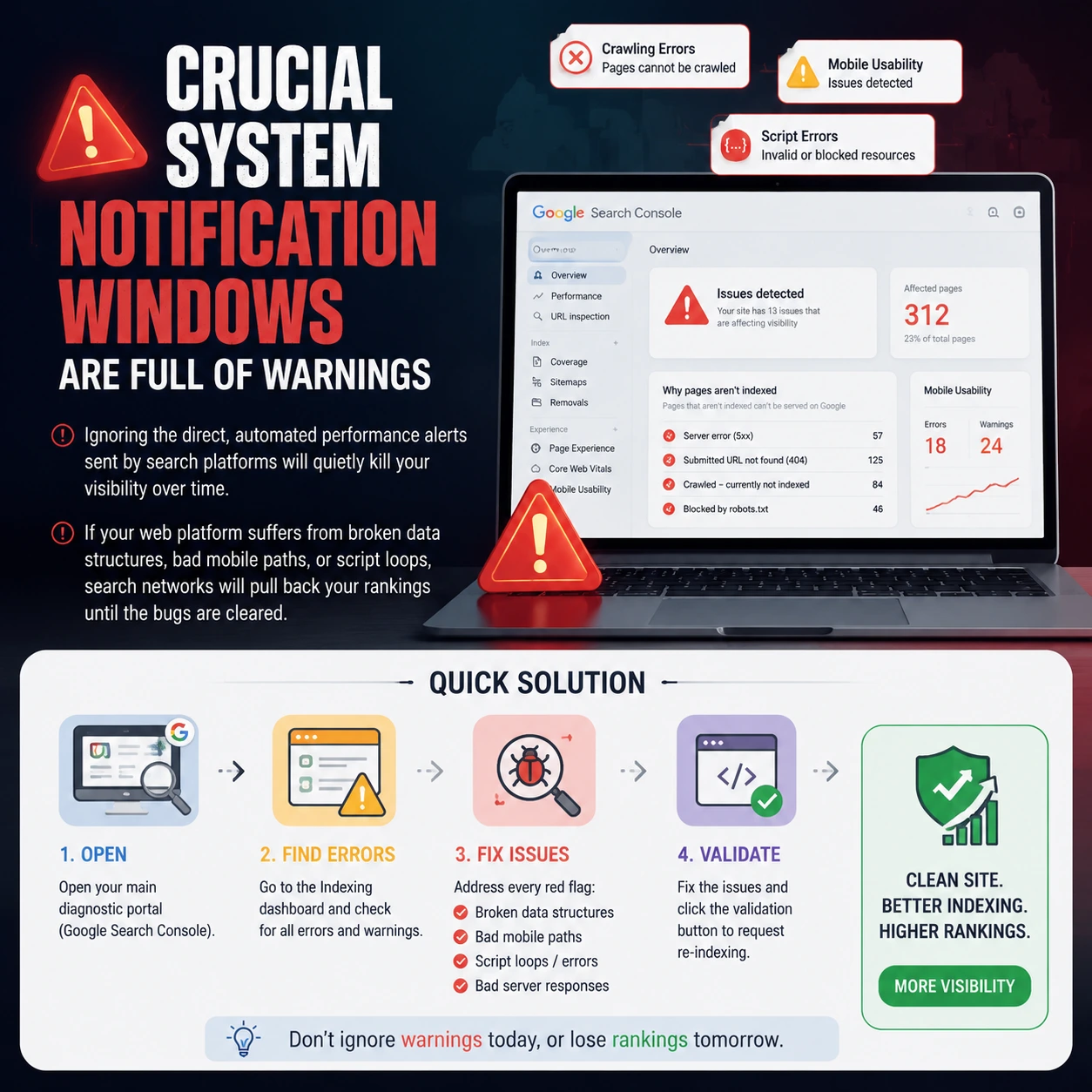
Ignoring the direct, automated performance alerts sent by search platforms will quietly kill your visibility over time. If your web platform suffers from broken data structures, bad mobile paths, or script loops, search networks will pull back your rankings until the bugs are cleared.
Quick Solution
Open your main diagnostic portal and search for explicit search console errors inside the indexing dashboard. Address every listed red flag immediately, focusing on fixing bad server responses and broken script codes before clicking the validation button.
Your Frontend Assets Take Forever to Render
Modern search algorithms place heavy emphasis on fast page performance, meaning slow loading elements trigger immediate ranking demotions. If your site forces visitors to wait multiple seconds for massive background graphics or blocking tracking scripts to load, your authority drops.
Quick Solution
Isolate slow page speed issues by running your primary landing pages through speed verification platforms. Compress every image asset into lightweight modern formatting, eliminate render-blocking script elements, and implement clean server-side caching setups.
Consumers Are Bouncing Right Back to Search Results
Publishing pages that fail to align with the actual goals of a user query creates a massive drop in on-site engagement. If a user clicks your link looking to buy a specific tool, but encounters a long, generic text essay instead, they will instantly exit your layout.
Quick Solution
Analyze your pages to fix search visibility drops by comparing your content layout against the top three ranking URLs for your target phrase. Restructure the top sections of your pages to answer the primary search query within five seconds of loading.
Competitors Are Providing Far Better Data Depth
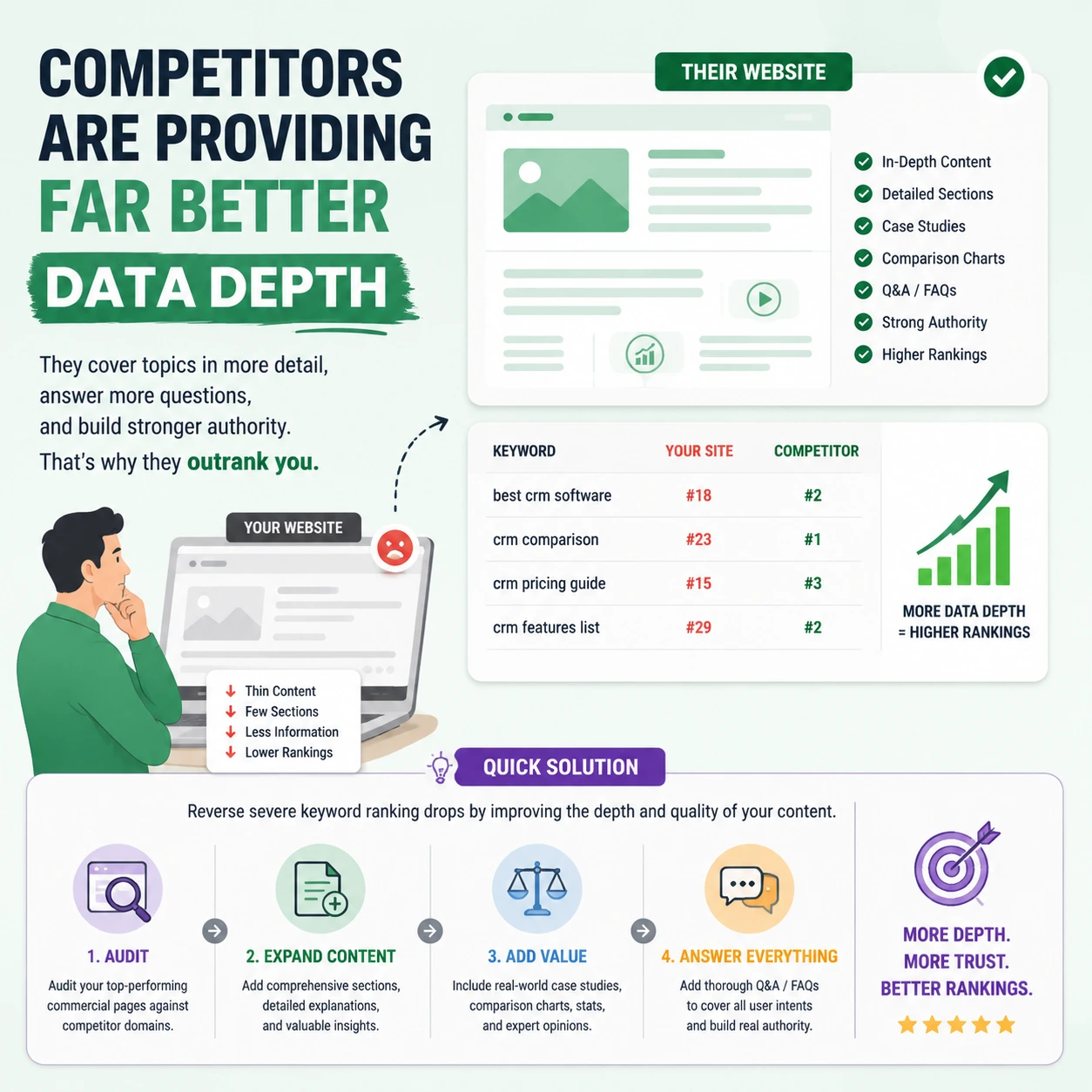
If your analytics dashboards are showing consistent keyword ranking drops across your primary service categories, it’s possible your content assets are being out-performed by more useful and comprehensive resources.
You need to do more than add more words to build stronger content. Businesses need to combine search intent research, topical authority, internal links, original insights, and technical optimisation. Learn how to put these pieces together in our complete business SEO framework for 2026.
Quick Solution
Reverse severe keyword ranking drops by auditing your top-performing commercial pages against rival domains. Expand your thin pages with real-world case studies, clear comparison charts, and thorough question-and-answer sections that build real authority.
Mobile Visitors Are Struggling to Navigate Your Layout
With a majority of global consumers accessing the web via smartphones, failing to optimize for small screens is a critical business error. If your text blocks are too small to read on mobile, or your navigation buttons overlap, your visibility will quickly decline.
Quick Solution
Prioritize mobile usability optimization by testing your layouts across multiple mobile viewport sizes. Ensure all text links have ample spacing between them, fix horizontal scrolling issues, and confirm that pop-up containers do not block your core content blocks.
Your Site Architecture Is Littered with Dead Links
Maintaining a broken internal linking structure makes it incredibly difficult for search robots to map your web property correctly. Dead pages that return missing errors drain your crawl budget and signal to search networks that your platform is unmaintained.
Quick Solution
Run a specialized technical site crawler to locate and fix broken links across your entire domain folder. Update every broken internal link to point toward an active, high-value destination page, and implement clean redirects for any removed assets.
Automated Quality Filters Flagged Your Text as Thin
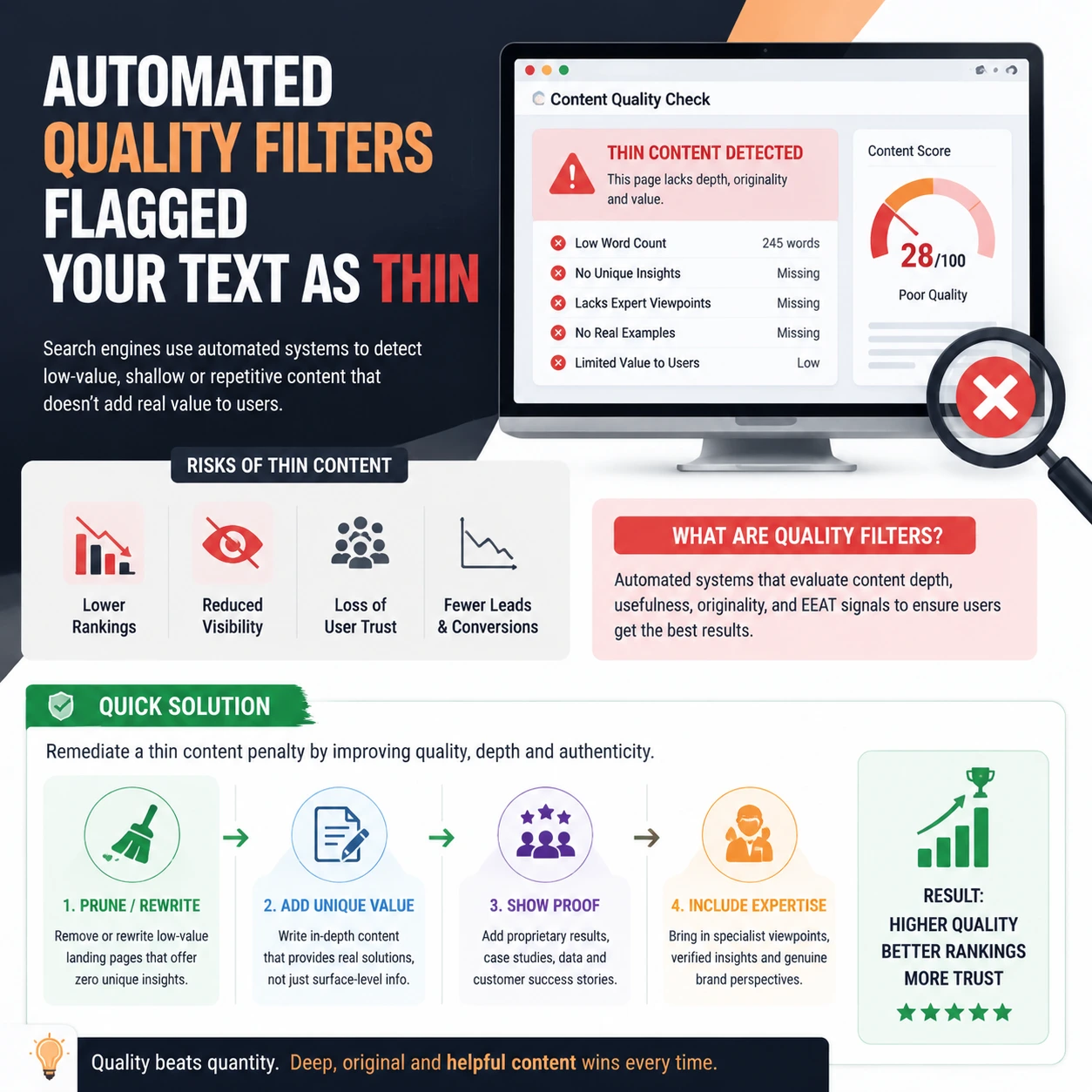
The deployment of the March 2026 Core Update introduced immense penalties for sites that rely on low-quality programmatic text. If your content library consists of shallow, unedited AI-generated text blocks that copy existing web articles, your traffic will vanish.
Quick Solution
Remediate a thin content penalty by pruning or rewriting low-value landing pages that offer zero unique insights. Infuse your remaining pages with genuine brand perspectives, proprietary customer results, and verified specialist viewpoints.
Your Overall Backlink Footprint Has Completely Stalled
Search networks use external links from trusted, high-authority websites to measure your true domain credibility. If your platform lacks incoming references from legitimate businesses within your industry, you will suffer from low search traffic numbers indefinitely.
Quick Solution
Combat low search traffic by shifting away from low-value directory submissions and focusing on earning editorial brand mentions. Reach out to reputable local business directories, industry podcasts, and non-competing partner vendors to secure high-quality resource links.
Avoid Blind Campaigns and Fix Your Data Foundation
Allowing your web platform to sit invisibly on the web is a direct waste of your digital real estate. If your team continues to publish articles without clearing hidden index blocks or addressing slow layout performance, your growth will stay dead.
Resolving a website not ranking Google problem demands stepping away from generic marketing guesses and executing clear technical changes instead. When you eliminate crawl errors, optimize your mobile layouts, and build deep content assets, you transform your site from an invisible folder into an automated lead generator.
Take a look at our step-by-step strategy covering technical SEO, local SEO, keyword research, content, backlinks, analytics and performance tracking at The Complete Guide to SEO for Businesses in the USA (2026).
Let our team dig directly into your domain architecture, identify your primary indexing blocks, and deploy high-impact optimization frameworks built to capture high-intent traffic. We build a search presence that drives real revenue.
Build a search presence that drives real revenue with our search engine optimization services.
Frequently Ask Questions
Running a comprehensive website SEO audit allows you to stop guessing about your traffic drops and isolate the exact code issues, broken server responses, or indexing blocks that are keeping your platform hidden from potential customers.
When your platform suffers from deep Google indexing issues, search crawlers are fundamentally unable to log your URLs into their primary database systems, which means your pages cannot appear in user search results, regardless of how good your content is.
To fix search visibility drops quickly, your team must immediately audit your search analytics to see which specific URL directories are losing ground, clear out any fresh crawl errors, and update outdated informational text blocks with original human data.
Fixing critical search console errors requires opening your indexing dashboard, isolating any specific server communication failures or mobile rendering bugs, making the necessary fixes inside your root code, and requesting a fresh system validation pass.
A sluggish interface forces mobile visitors to wait multiple seconds for your layout assets to fully load, which spikes your immediate bounce rates and signals to search networks that your platform delivers a poor user experience.
You must run a technical domain scraper to locate every dead internal path, change those broken links to point toward live high-value target assets, and set up permanent clean server redirects for any deleted landing page paths.
Completing thorough mobile usability optimization ensures your buttons, forms, and layout containers scale perfectly onto smartphone viewports, which prevents mobile buyers from abandoning your site and stabilizes your position metrics.
If your analytics panels display a sudden, massive drop in impressions across programmatic pages that rely entirely on unedited AI text, your domain has likely triggered an automated thin content penalty that requires a comprehensive content overhaul to reverse.