
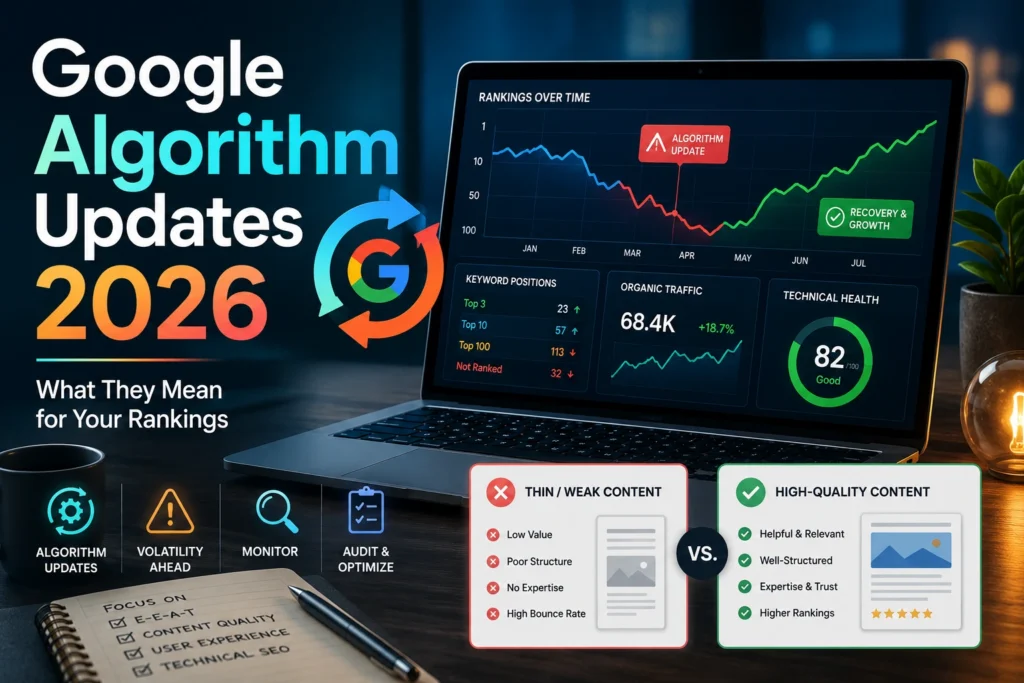

Operating an organic traffic strategy without tracking real-time layout guidelines from primary search networks is a fast way to lose your target audience. Many digital brands structure their resource libraries based on ancient optimization rules, assuming that simple keyword placement is enough to maintain clear market authority.
However, when a massive Google algorithm update 2026 rolling cycle drops, unoptimized architectures face sudden, steep visibility drops, un-optimised architectures can experience sudden and steep drops in visibility. For a broader organic growth framework that includes algorithm updates, check out our complete guide to SEO for businesses in the USA in 2026.
Remaining successful in the current search environment requires looking past surface-level rankings and building technical, deeply authoritative systems that align with the latest quality parameters.
The Architectural Evolution of Content Validation

Navigate System Dynamics and Ranking Fluctuations
The deployment of the March 2026 Core Update introduced immense core algorithm volatility across almost every global commercial sector. Rather than adjusting single ranking variables, these comprehensive system modifications alter how core databases measure overall informational quality over multiple weeks. Surviving periods of extreme core algorithm volatility requires staying calm and auditing your baseline data over an extended window instead of making rushed, reactive adjustments while the primary search nodes are still stabilizing.
Monitor Corporate Impression Fluctuations
Evaluating structural indexing health requires maintaining constant search visibility tracking across your entire domain path. When quality filters update, standard visibility indexes display sharp drops or surges that indicate how your deeper directory sheets are handling the new criteria.
Implementing automated search visibility tracking metrics ensures your technical teams spot algorithmic variations across localized folders before global organic traffic drops impact your primary sales funnels.
Eliminate Low-Value Synthetic Production Models

Analytical tracking reports indicate that these sweeping low-effort content demotions have stripped up to 60% of search impressions from sites relying purely on unedited AI summaries with zero unique domain data.
A major focus of the recent spring deployments involves massive low-effort content demotions targeting shallow informational assets. Web networks that churn out thousands of generic, programmatic landing pages lacking original human case studies are experiencing swift, automated penalties.
Establish Sustainable Expertise Over Time
Winning highly competitive transactional terms requires conforming to stricter topical authority timelines that value niche dedication over general content collection.
The February 2026 Discover Update proved that search engines now judge domains based on deep subject expertise rather than single high-quality pages. For instance, a localized financial site with an extensive section on tax law updates will build visibility faster than a broad lifestyle portal attempting to cover the exact same financial rules on a whim.
Reverse Automated Search System Restrictions
Recovering your digital footprint after a sharp core ranking drop requires a calculated algorithmic penalty recovery plan that targets systemic site quality. Clean remediation avoids superficial text updates, focusing instead on pruning thin directory archives and consolidating duplicate tutorial paths.
If you’re a business in need of help implementing these improvements, you can check out our professional SEO services that include website auditing, technical optimisation, content enhancements, link building, and continuous performance monitoring.
Building this rigorous algorithmic penalty recovery protocol is the only reliable way to show search crawlers your platform has eliminated low-value properties during subsequent indexing passes.
Advance Core Web Vital Benchmarks
Modern engineering protocols place heavy emphasis on user experience prioritization, turning page response times into a critical ranking metric.
The introduction of Interaction to Next Paint (INP) as a main ranking factor means your application scripts must respond to user actions in under 200 milliseconds. Prioritizing user experience prioritization across your frontend layouts stops mobile visitors from bouncing out of slow loading containers and stabilizes your performance indicators during major platform shifts.
Coordinate Content Assets with Evolving User Queries
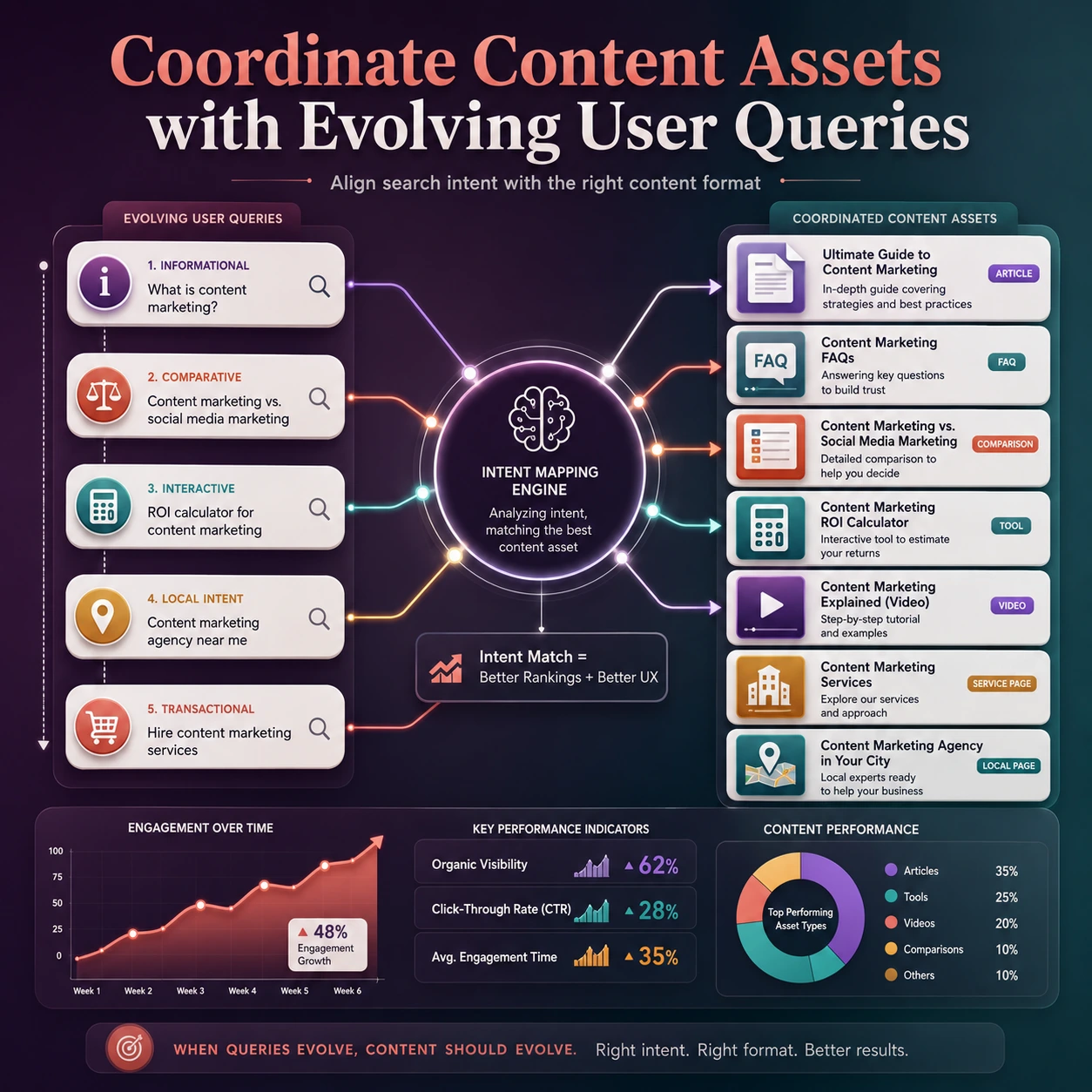
Algorithmic changes are frequently rolled out to match shifting consumer behaviors, demanding deep intent shift alignment across your landing pages. When consumers stop searching for brief definitions and start seeking interactive web calculators, your layouts must pivot to deliver those dynamic workflows immediately.
Maintaining this tight intent shift alignment protects your main content investments from becoming obsolete when search engines update their understanding of a specific user task.
Detect Complex Programmatic Manipulation Patterns
Search networks now leverage advanced machine learning models for real-time Spambrain pattern detection to eliminate unnatural linking networks and hidden scraper setups.
This automated filter analyzes link acquisition velocity and contextual anchor text placement to flag manipulative domain growth attempts instantly. Operating within the boundaries of safe Spambrain pattern detection requires focusing entirely on editorially earned links from legitimate, high-traffic commercial portals.
Protect Database Performance During Crawl Fluctuations
Large application platforms with complex nested filtering screens often experience sudden crawling budget drops following major core updates.
When search crawlers determine that a site contains excessively thin sorting pages, they reduce the frequency of their diagnostic visits, leaving your fresh product updates unindexed. Optimizing file structures to prevent crawling budget drops helps enterprise platforms index new transactional assets up to 45% faster.
Manage Layout Elements Across Search Results
The search landscape faced massive structural changes this year due to widespread rich snippet deprecation affecting generic informational schemas. Search networks have reduced the visibility of basic review stars and simple FAQ dropdown displays to keep search result components clean and focused.
Adapting to this rich snippet deprecation requires shifting your technical formatting toward advanced entity definitions that supply direct answers into generative AI search summaries.
The Reality Check & Action Plan
Treating your online visibility like a static metric is a direct path to an invisible domain. If your marketing departments spend their days chasing old keyword formulas while ignoring modern core system updates, your pipeline is fundamentally vulnerable.
When a major Google algorithm update 2026 cycle rolls out, it exposes every technical shortcut, thin landing page, and slow component layer on your domain. True optimization demands a shift toward deep informational depth, pristine technical site health, and verified human authority.
For a detailed overview of technical SEO, local SEO, content strategy, link building, analytics and search visibility, read The Complete Guide to SEO for Businesses in the USA (2026).
Guess what? Our team steps directly into your current search infrastructure, identifies hidden technical liabilities, and deploys scalable optimization frameworks engineered to survive major platform shifts. We transform unpredictable search channels into stable, high-converting revenue streams.
Frequently Ask Questions
Brands should monitor their data dashboards for normal fluctuations but avoid making major structural code changes until the rollout completely concludes and the data stabilizes.
Focus immediately on fixing core technical crawl errors, optimizing your site speed benchmarks, and removing low-value or duplicate landing pages across your deep folders.
It monitors your impression totals across specific page groups, letting you see exactly which directory folders are losing ground before overall traffic drops hit your main dashboard.
Search networks have upgraded their filters to prioritize unique information gain, meaning sites that copy existing web summaries without adding real insight get demotions.
Yes, because core updates are broad systemic recalibrations rather than manual webmaster actions, improving overall site quality will restore authority during future rollouts.
With interaction metrics carrying more weight, slow frontend execution directly triggers lower rankings as search engines steer users toward fast, responsive workspaces.
The AI looks at the contextual relevance and actual user traffic flowing through a link, ignoring manufactured link placements that offer zero real web utility.
When search crawlers encounter thousands of broken links, redirect loops, or thin search results pages, they reduce their crawl frequency to conserve server power.