

Most brands treat a redesign like a fresh coat of paint, only to realize they’ve accidentally painted over their front door. The typography is sharp. The animations are fluid. But when you check the analytics, the line isn’t going up but falling off a cliff.
You spent months on the visual “wow” factor, only to realize you’ve accidentally nuked five years of organic authority. Your keywords have vanished, your top-performing pages are returning 404 errors, and your brand has effectively moved from a prime storefront on Page 1 to a ghost town on Page 10.
In our work at SocialzRank, we call this “The Redesign Trap.” It happens when a company treats a website overhaul as a creative project rather than a technical migration. This guide explores why a search-first approach is non-negotiable for maintaining authority. From URL mapping to Core Web Vitals 2026, we show you how to transform a launch into a massive leap forward rather than a recovery mission.
Why Aesthetics Alone Are a Business Liability
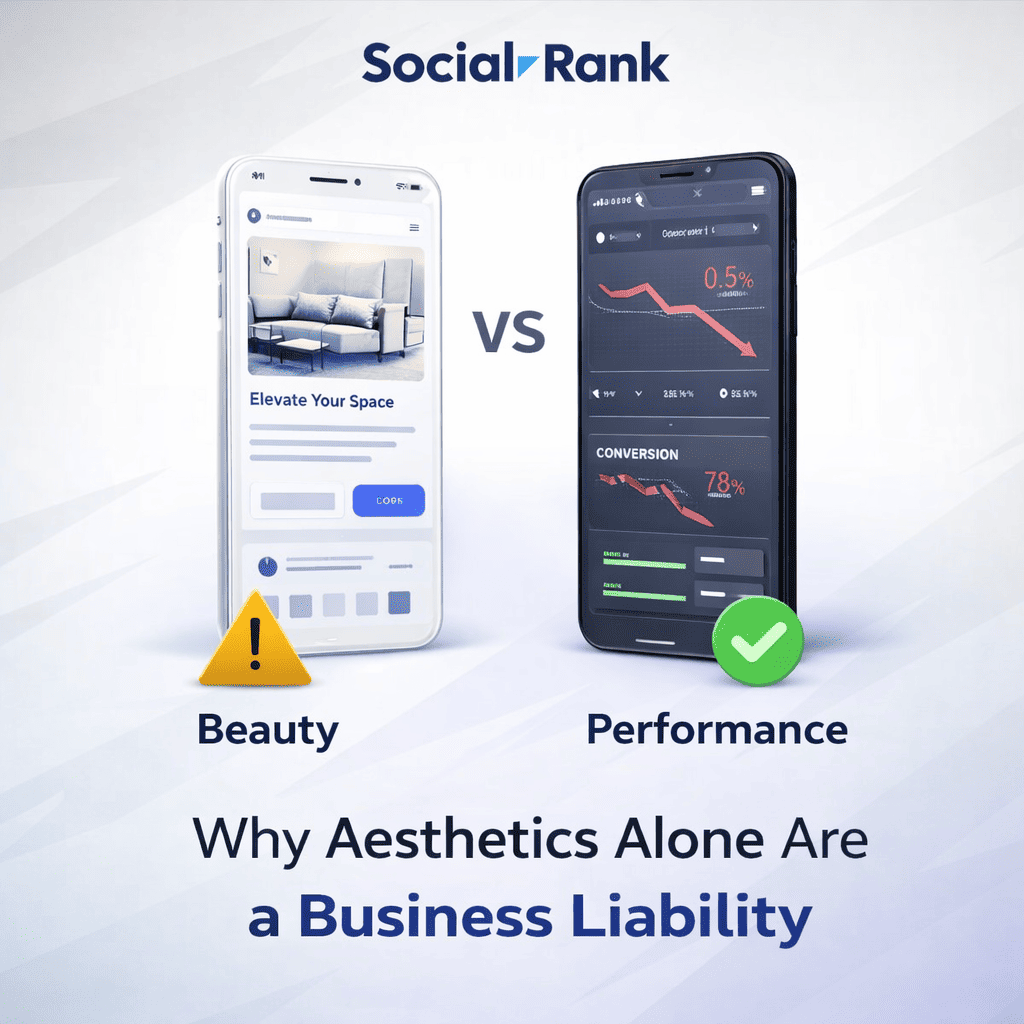
We have all seen it: a company decides they need a “fresh look.” They hire a creative agency that builds a stunning, image-heavy site that looks like a digital art gallery. But behind the scenes, the URL structures have changed, the metadata has been deleted, and the site speed has plummeted.
The reality check is simple: Google does not care how “modern” your gradient is if the bot can no longer find the entrance to your site. A technical SEO site audit usually reveals that most redesigns lose 20% to 40% of their traffic within the first month due to poor planning. To maintain rankings during redesign, you have to stop thinking of SEO as a “plugin” you add at the end. It is the architectural blueprint that holds the entire building together.
The Anatomy of a Search-First Migration
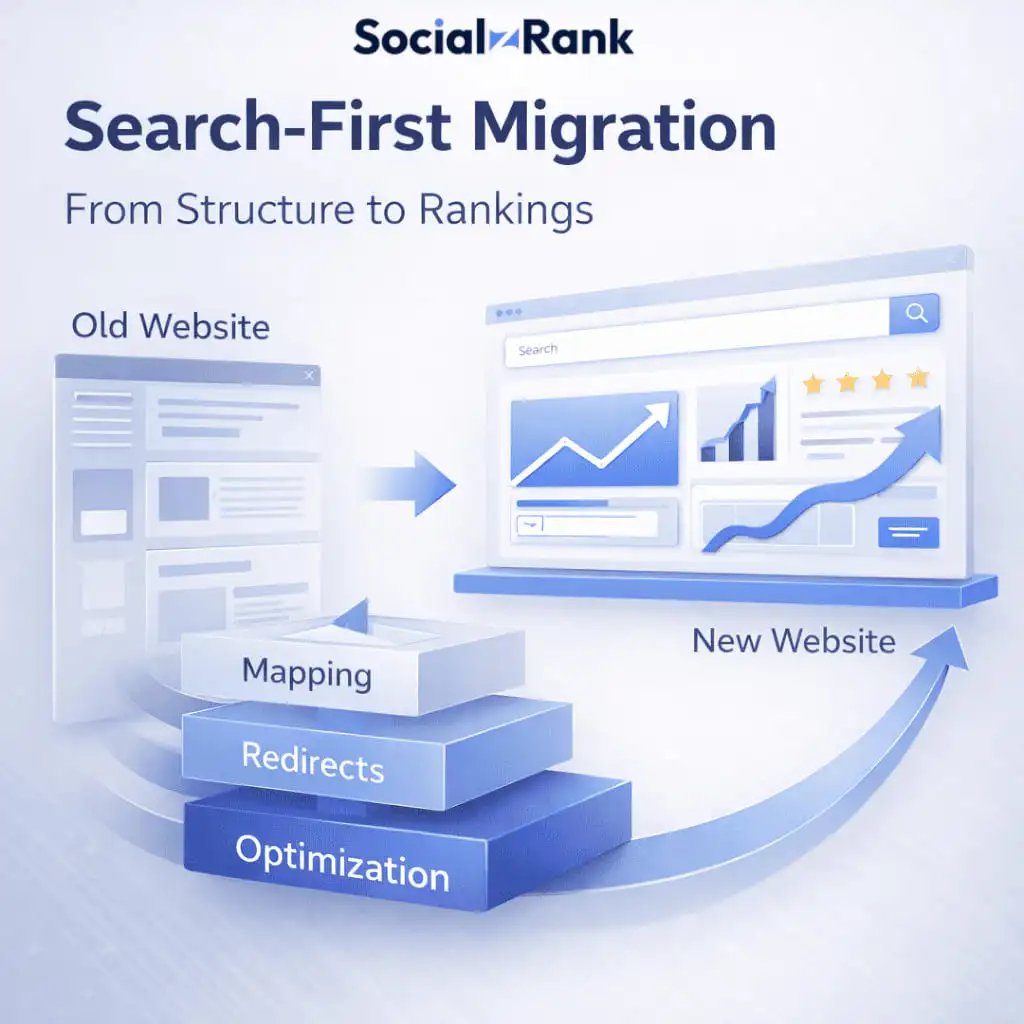
The difference between a traffic crash and a traffic surge lies in your SEO migration checklist 2026. This isn’t just a list of tasks; it is a defensive wall around your revenue.
The most critical ( most often ignored) step is a URL redirect mapping strategy. When you change a page from /our-services to /what-we-do, every backlink, bookmark, and indexed result for the old link dies instantly. Without a 301 redirect, you are telling Google that your authority no longer exists. A search-first redesign treats every existing URL as an asset that must be protected, moved, and accounted for before the “Live” button is ever pressed.
Designing for the Algorithm and the Human
In 2026, the line between “good design” and “good SEO” has effectively disappeared. Google’s Core Web Vitals 2026 updates have made it clear: if your site is slow, clunky, or unresponsive, you will be penalized. Responsive website redesign SEO is no longer just about making things fit on a mobile screen. It’s about “Interaction to Next Paint” (INP) and ensuring that the user’s journey is frictionless.
When we lead a redesign at SocialzRank, we prioritize performance over fluff. Every high-resolution hero image or background video must earn its place on the page. If it doesn’t contribute to the conversion or the story, and it slows down the site, it doesn’t make the cut.
The “Zero-Day” Launch Strategy
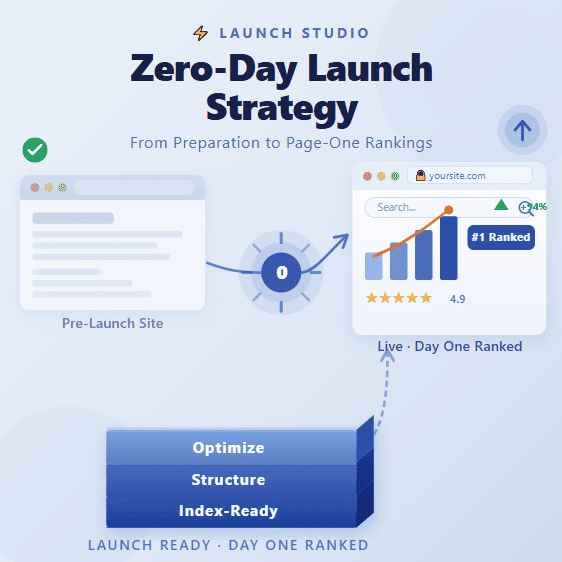
Most people think the “launch” is the finish line. In reality, it is the start of a 14-day high-alert period. This is where you recover lost SEO rankings or prevent them from slipping in the first place.
One of our top website launch SEO tips is to keep your old site data accessible for at least 60 days. You need a “before” snapshot to compare against the “after.” If you notice a specific service page has dropped from position #2 to #25, you need to be able to look at the old content, internal links, and technical markers to identify what changed.
SEO is a game of variables; if you change too many at once without a tracking plan, you won’t know which one broke the machine. That is a brilliant move. Adding a concrete roadmap makes the blog actionable; it stops being just “advice” and becomes a “blueprint.”
The 5-Step Blueprint: How to Rebuild Your Empire Without Burning the Foundation
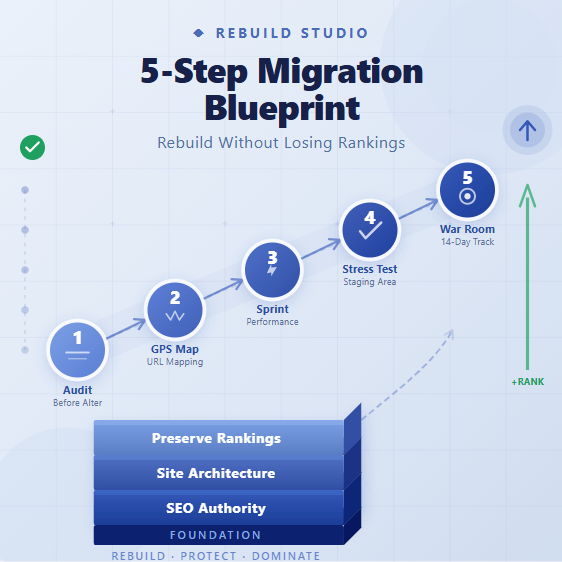
Most people treat a redesign like a “leap of faith.” At SocialzRank, we treat it like a surgical strike. If you want to move from the shadows of Page 10 to the spotlight of #1, this is the exact sequence you must follow.
1. The “Audit Before You Alter” Phase
If an old blog post from 2019 is responsible for 40% of your leads, that content must be preserved or improved, not deleted. You can’t fix what you don’t measure. If you delete your top-performing page because it “looks ugly,” you are firing your best salesperson.
The Action: Run a full crawl of your current site. Identify your “Power Pages”, the ones currently bringing in the most traffic and backlinks.
2. The “Digital GPS” (URL Mapping)
Mapping yoursite.com/services-old to yoursite.com/premium-services makes sure Google’s “link juice” flows directly into the new structure. Changing a URL without a 301 redirect is like moving houses and not telling the post office. Your mail (and your traffic) will simply stop showing up.
The Action: Create a master spreadsheet. Column A is every old URL. Column B is the corresponding new URL on the new site.
3. The “Performance First” Design Sprint
Instead of a 10MB background video that takes 5 seconds to load, use a high-performance compressed Hero image that clears the Largest Contentful Paint (LCP) in under 1.2 seconds. A slow, beautiful website is just a high-definition way to lose money.
The Action: Design around Core Web Vitals 2026. Optimize images, minify code, and prioritize “Mobile-First” layouts before you worry about fancy hover effects.
4. The “Staging Area” Stress Test
Never, under any circumstances, “test in production.” Use a tool to crawl the staging site to ensure no “NoIndex” tags were accidentally left in the code, a common mistake that keeps new sites invisible to Google.
The Action: Set up a staging site (a private version of your new site). Check for broken links, missing meta tags, and mobile responsiveness issues before the world sees it.
5. The “Post-Launch” 14-Day War Room
The launch isn’t the end; it’s the most challenging part of the journey. If a high-ranking page drops 5 positions, check if the internal linking structure on the new site is as strong as the old one, and adjust the “link equity” accordingly.
The Action: Monitor Google Search Console like a hawk. Look for a spike in 404 errors or a drop in impressions. If a page dips, deploy your organic traffic recovery plan immediately.
Transforming the Page 10 Curse into a Page 1 Blessing
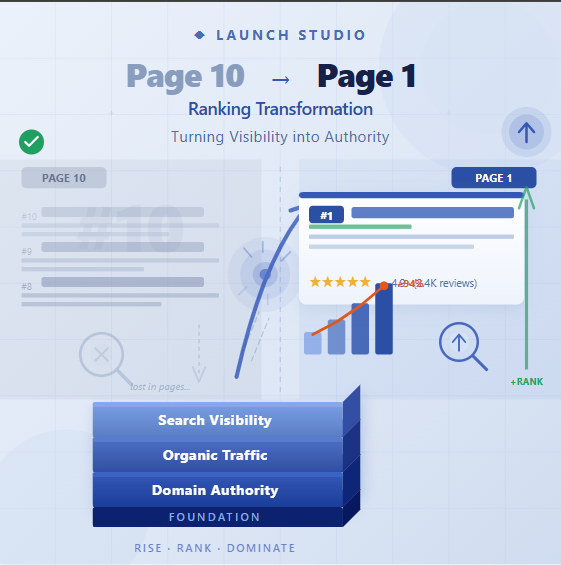
If you are already in the middle of a traffic freefall, you need an organic traffic recovery plan. The first step isn’t to add more content; it’s to fix the plumbing.
We often find that “invisible” sites are suffering from “Zombie Pages”, content that was migrated but serves no purpose, or technical errors that are preventing Google from crawling the new structure. The best SEO redesign services don’t just look at what’s on the page; they look at what’s in the code. By cleaning up the crawl budget and aligning your new design with actual search intent, you can often see a “rebound effect” where the site eventually ranks higher than it did before the redesign.
Growth Is Never an Unexpected Accident Or Luck
The transition from Page 10 to #1 isn’t a result of “luck” or a “viral moment.” It is the result of a calculated, search-first methodology. You want a website that serves as a 24/7 sales machine, not a digital brochure that no one can find.
At SocialzRank, we specialize in the high-stakes world of digital growth. We understand that a redesign is a moment of extreme vulnerability for a brand, but also its greatest opportunity. You don’t have to choose between a site that looks beautiful and a site that ranks. When you integrate SEO into the very DNA of your design, you create a platform that doesn’t just look like a market leader, but performs like one.