


Successful implementation of a content calendar template demands a total rejection of over-engineered tracking systems that turn writers into data entry clerks. Real team synchronization occurs only when your management layout fits seamlessly into the daily communication habits of your creative staff. To achieve high adoption rates, your marketing leads must establish a single, transparent dashboard where target keywords, audience insights, and multi-channel publication deadlines live together without visual clutter. This streamlined planning approach should support a broader Content Marketing Strategy 2026: The Complete Playbook for US Brands, where research, production, distribution, and performance tracking operate as one connected system.
Long-term channel growth breaks down the moment creators face manual reporting loops that steal time away from core content generation. Simple automation rules and clean Kanban layouts transform a slow database into an invaluable roadmap for your entire organization. This structural change shifts campaign tracking from a tedious administrative task into an asset that maintains absolute brand alignment across every digital channel.
Why Do Standard B2B Content Planning Tools Stifle Internal Creative Output?
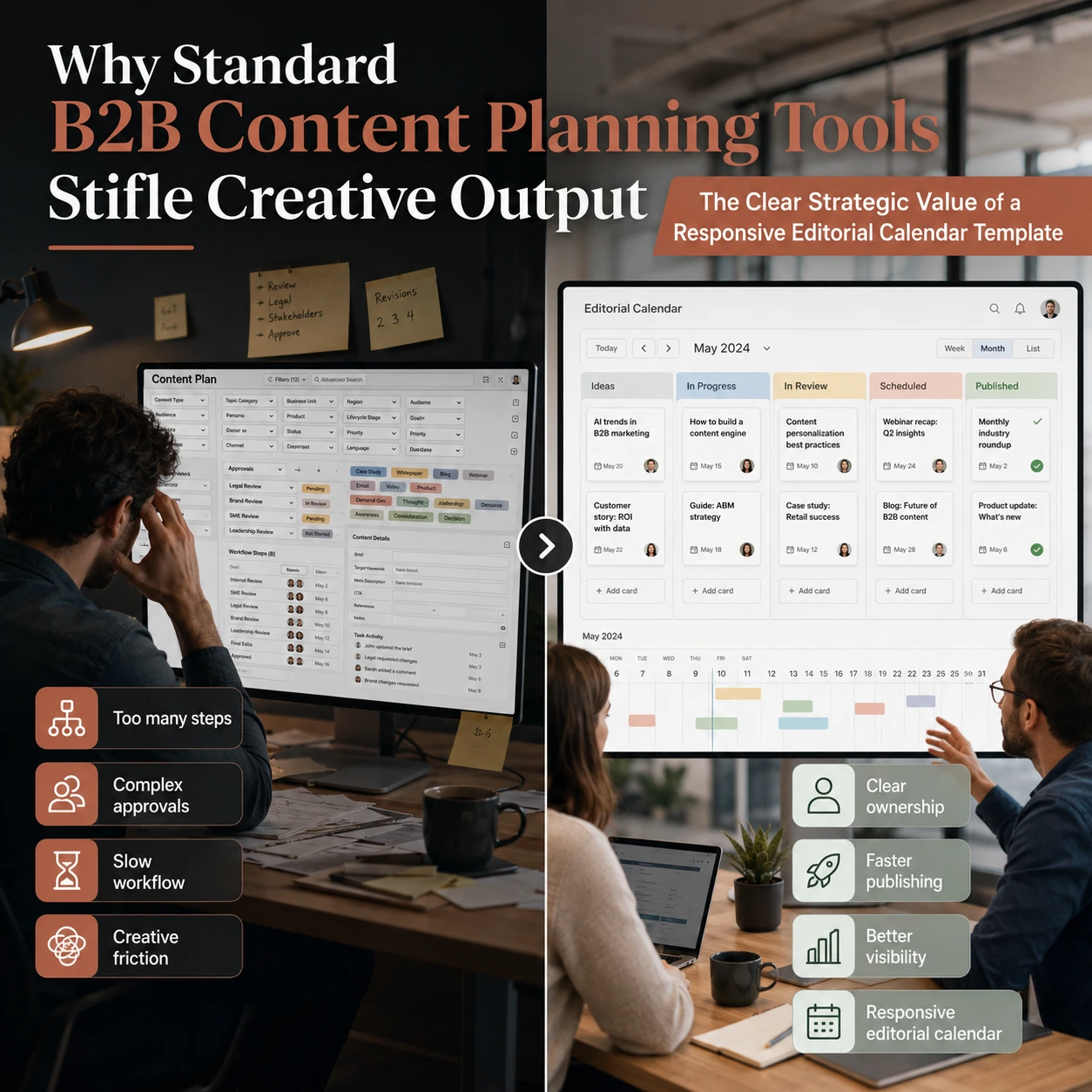
Most marketing departments abandon their shared tracking spaces because executives choose platforms for high-level reporting rather than daily utility. Overly complex software forces writers to navigate confusing drop-down boxes, detailed tag protocols, and multi-layered approval steps that delay actual production.
Creators quickly grow tired of slow interface screens, eventually moving back to private chat channels to manage assignments. This internal fragmentation completely ruins project visibility, making it impossible to scale campaigns or maintain a steady publication cadence.
The Clear Strategic Value of a Responsive Editorial Calendar Template
A clean, central database protects your digital assets and directly influences your overall search visibility performance. It also strengthens your wider content marketing strategy for 2026 by keeping SEO goals, audience intent, publishing schedules, and distribution tasks aligned. Clear ownership labels inside each task card make sure that high-value copy never gets stuck in the editing loop. When every contributor knows their exact next step, production speed balances out naturally across the calendar year.
Quantifiable Productivity Returns of a Structured Content Production Pipeline
A modern content marketing workflow delivers undeniable commercial benefits that optimize your total resource spend.
- Zero Duplicate Research: Writers avoid covering identical topics by checking active task cards before starting a new draft.
- Stable Production Windows: Managers predict exact publication dates based on accurate historical phase metrics.
- Proactive System Maintenance: Automated calendar alerts prompt creators to update declining URLs before traffic slips affect lead generation.
- Fluid Cross-Channel Assets: Long-form blog entries break down into smaller social media posts right inside the main task card.
Simplified workspace filters allow your writers to claim pre-approved briefs independently, bypassing slow, manual task assignments entirely.
The Fastest Path to Launch an Actionable Content Schedule
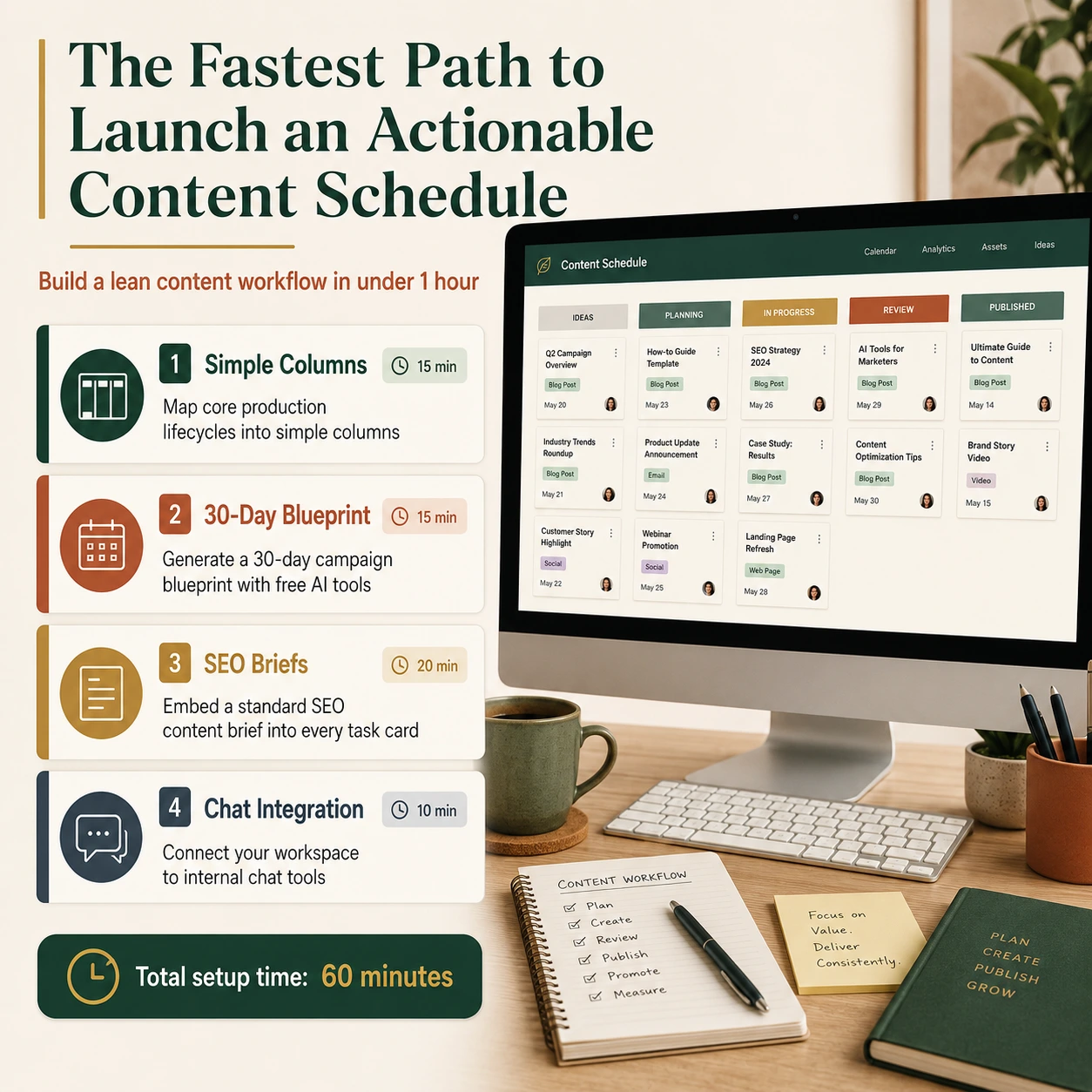
You can build a highly effective, team-approved marketing dashboard in less than an hour by focusing entirely on essential user actions. Free automation tools make it simple to establish a lightweight production tracking space without expensive platform setups. This linear roadmap outlines the leanest path to build a responsive, high-velocity editorial pipeline.
- Map Core Production Lifecycles Into Simple Columns (Time required: 15 minutes)
Launch a free account on a project tool like Notion. Build four basic status columns: Topic Backlog, Active Production, Review & Quality Control, and Published. Keep the view clean by hiding all secondary administrative properties from the central workspace.
- Generate a 30-Day Campaign Blueprint via Free AI Engines (Time required: 15 minutes)
Open a free, specialized content ideation tool like Taskade AI or Koala AI. Input your primary target demographics, industry focus, and conversion goals. Run the system generator to instantly export a four-week plan filled with unique post titles.
- Embed a Standard SEO Content Brief Format Into Task Cards (Time required: 20 minutes)
Configure a reusable page template inside your tracker that automatically fills whenever a teammate adds a title. This layout must contain specific spaces for primary search queries, competitor links, target intent flags, and explicit word count limits.
- Connect Your Central Workspace to Internal Chat Tools (Time required: 10 minutes)
Link your master database to your team communication software using a free webhook tool. Set a live automation rule that sends a clear notification to your group channel the moment a draft card moves into the editing column.
How to Utilize a Free AI Tool to Automate Workflow Creation
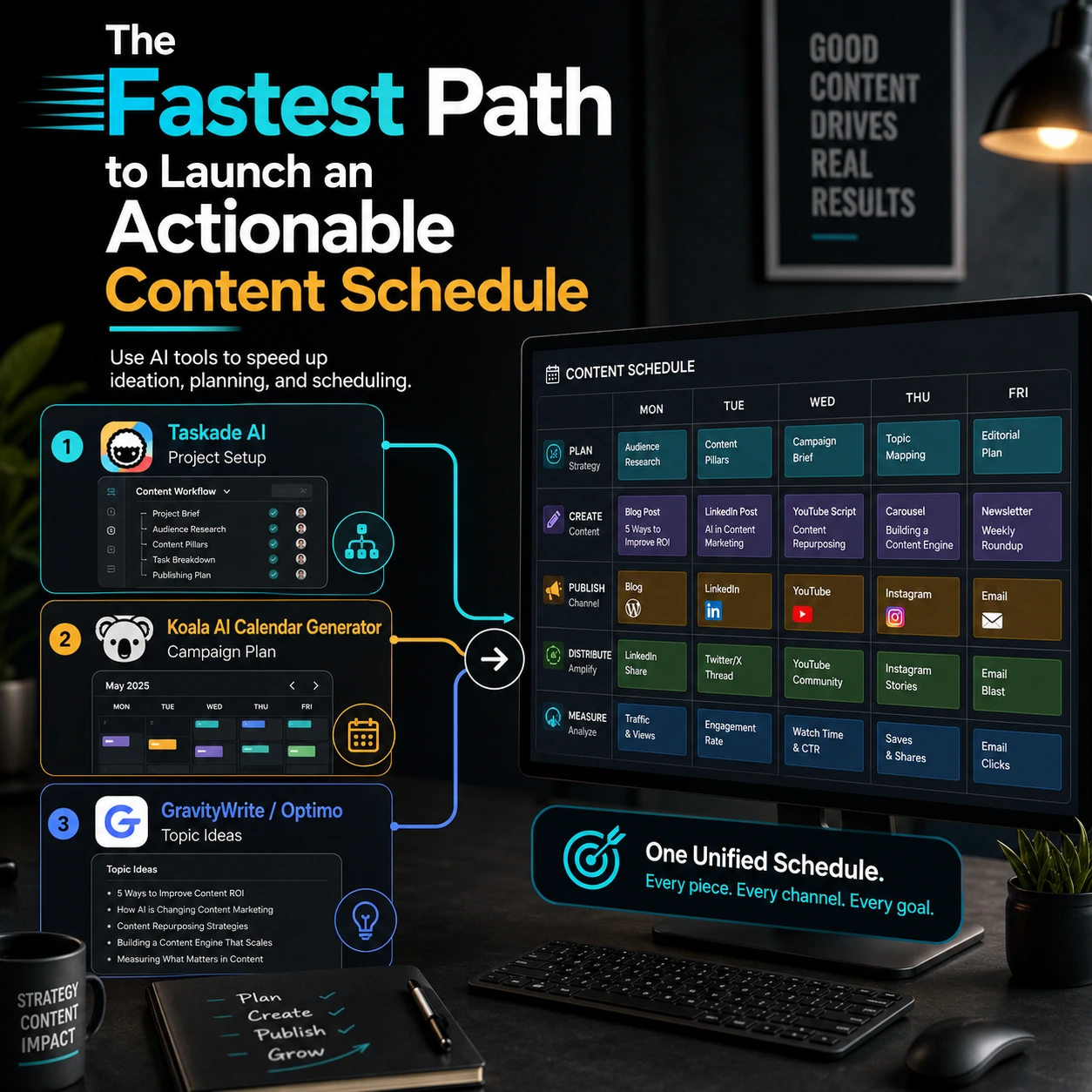
New-generation growth teams skip tedious, multi-hour brainstorming sessions by utilizing free artificial intelligence during the early planning stages. Accessible web applications allow a single coordinator to execute deep search intent mapping and layout generation that once required a whole team of specialists. This shift removes early creative blocks, allowing your writers to focus their attention on crafting deep, original human prose.
- Taskade AI: This flexible tool builds comprehensive marketing projects from a single text phrase, populating your master workspace with clear platform sub-tasks automatically.
- Koala AI Calendar Generator: This software crafts complete multi-channel social media roadmaps, providing targeted theme focuses and ideal distribution windows for individual channels.
- GravityWrite / Optimo: These single-focus tools deliver months of niche topic ideas from one broad search keyword, removing administrative delay from your early planning phases.
Pairing a Fixed SEO Content Brief Format With Semantic Mapping Software
Your team can build a comprehensive topical authority cluster map by processing competitor search data inside free chat models like Gemini. You prompt the engine to pinpoint critical informational gaps, then export those content opportunities directly into your content calendar template. This automated step confirms every card in your database holds a data-backed brief, meaning your writers build material optimized to rank right from the start.
How to Reverse Organic Traffic Drops Using a Content Repurposing Checklist

Older URLs inevitably lose visibility when market search trends shift or competitors launch fresher guides on identical keywords. You can fight this revenue loss by deploying a clear content repurposing checklist inside your master schedule on a bi-annual rotation.
This process helps your team repurpose long-form articles into social media slides, short videos, and email newsletter content. Creative recycling increases the value of existing research. It also supports stable traffic without raising your monthly content budget.
Simple Layout Architecture Outperforms Over-Engineered Databases
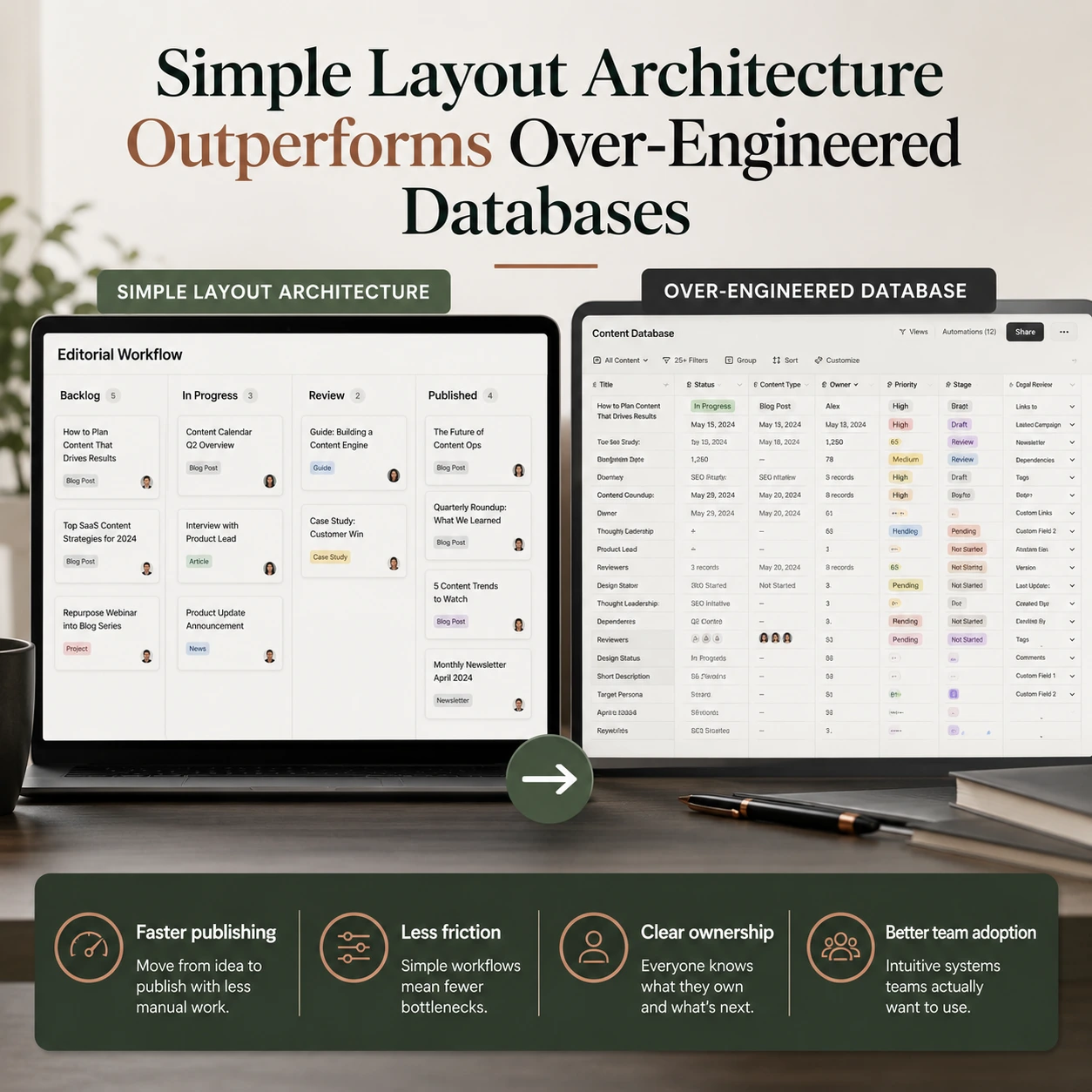
High-velocity publishing requires project managers to favor clean layout clarity over dense, multi-layered tracking tools. Internal analytics prove that forcing creators to interact with complex relational databases causes a fifty percent drop in overall production consistency compared to basic visual calendars. This metric highlights that intuitive, self-service dashboards are the only dependable way to keep a team aligned and executing at peak performance.
An editorial calendar delivers the strongest results when it is connected to keyword research, content creation, distribution, repurposing, and conversion tracking. Explore our complete content marketing playbook for US brands to see how these elements work together within one scalable framework.
Wanna Know SocialzRank’s Expert Method?
High search visibility remains entirely useless if your incoming audience leaves your domain before moving into your sales pipeline. At SocialzRank, we break down the operational walls that separate top-of-funnel web traffic from real, measurable corporate revenue growth.
Moreover, we craft unyielding content distribution engines, advanced semantic data structures, and automated AI-assisted workflows that transform casual readers into lifelong brand buyers. Our growth team manages your digital footprint with absolute technical precision, building deep domain authority that communicates your exact value directly to enterprise decision-makers.
Frequently Ask Questions
A streamlined template removes unnecessary data-input requirements, allowing your writers to access their SEO briefs and upload drafts without clicking through complex layout levels. Removing this system friction keeps your creative staff focused on production, which prevents project delays and preserves calendar momentum.
Spreadsheets lack native task assignment features, automated due-date notifications, and responsive calendar views, which lead to version errors across multi-member marketing groups. They also keep strategy notes isolated from active documents, making it difficult for managers to monitor actual campaign progress in real time.
A proper cluster map links secondary, high-intent support topics back to a central pillar landing page using strict internal hyperlink guidelines. This organized layout structures your material logically for search engine bots, proving your deep niche expertise and elevating organic rankings without extra ad spend.
You connect these distribution channels using live webhooks that monitor your main site URL feed for new publications. The system parses the raw text automatically, generates platform-specific snippet posts, and logs them into your social queue at perfect performance times without manual effort.
Web users read search content to solve immediate problems, meaning your educational posts must deliver actionable answers within the first three paragraphs. Shortening this path satisfies user intent right away, which drops your site's bounce metrics and builds real brand authority during the initial visit.
A structured recycling checklist guides your team to transform aging, high-performing articles into fresh content formats like video scripts or slide decks. This continuous reuse maximizes the visibility of your past research investments, keeping your domain metrics stable without demanding constant creation costs.
Free tools remove manual project management tasks and automate repetitive sharing actions, allowing lean teams to scale production without adding administrative headcount. Maximizing your creative efficiency lowers overall acquisition spend by pulling in highly profitable organic traffic.
A unified brief format forces internal copywriters and external freelancers to follow identical target user guidelines, tone rules, and competitive layout structures before typing. This proactive alignment keeps your messaging uniform across channels, protecting your audience from disjointed, off-brand experiences.