
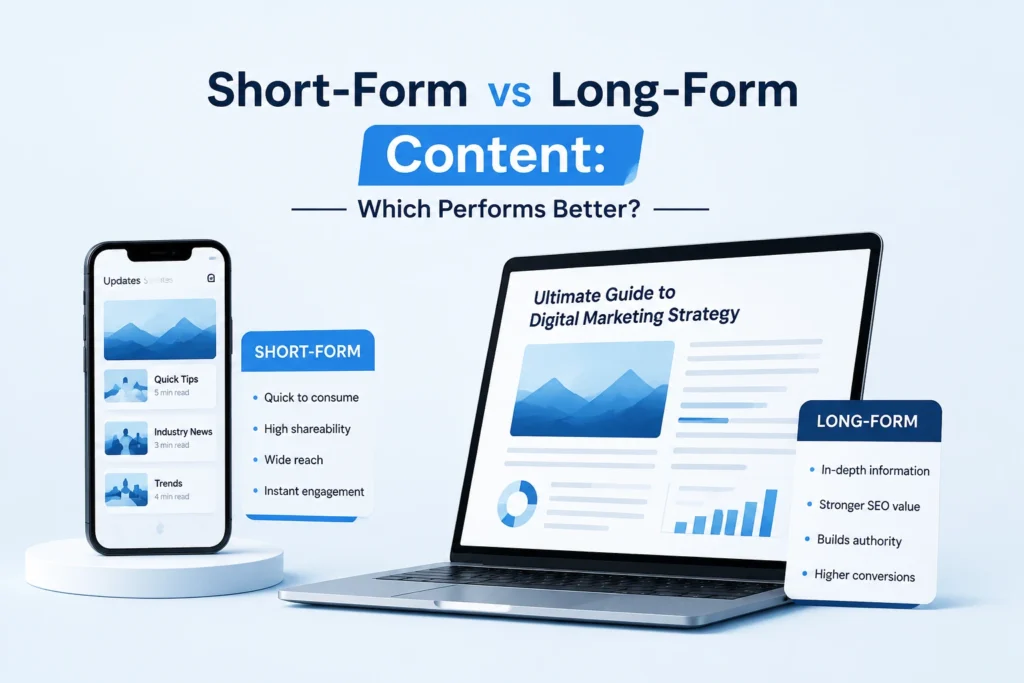

Creative directors often find themselves trapped in an endless debate over whether to spend their monthly production budgets on quick social media snippets or deep industry resources. The definitive answer is that neither asset length wins the entire funnel; short-form content drives early brand discovery while long-form content is essential for securing real domain authority and final customer conversions. Brands reject the idea of choosing a single layout style, choosing instead to link both lengths together into a unified distribution system. This integrated approach is a core part of a successful Content Marketing Strategy 2026 guide, where brands combine different content formats to create a scalable system for awareness, engagement, and conversions.
Relying entirely on short media updates leaves your domain without the comprehensive text data required to prove real subject matter expertise to search tools. Conversely, publishing massive technical research guides without creating accessible entry points means your material remains hidden from fast-paced mobile feeds. Designing your content lengths around specific buyer mindsets creates a smooth, logical path that turns casual app scrollers into dedicated, long-term brand advocates.
How Does Document Length Shape Modern Organic Discovery?
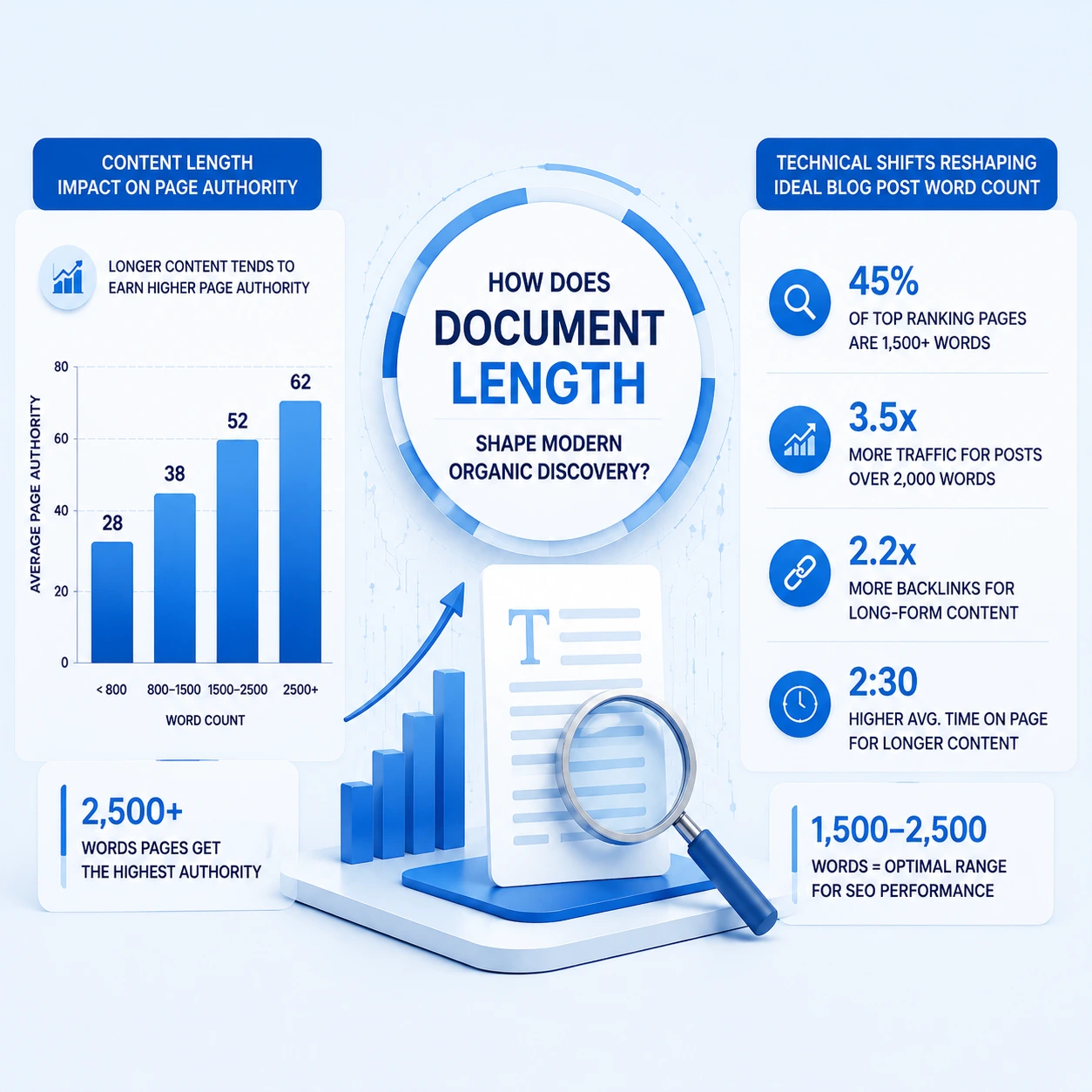
Search engines evaluate a webpage’s informational depth when ranking content in search results. Short snippets can quickly answer simple questions. However, deep informational assets provide the context needed to rank for competitive keyword groups.
Evaluating the Real Content Length SEO Impact on Page Authority
High-authority websites understand that length directly shapes how search crawlers distribute organic visibility across a specific market niche. Industry data confirms that comprehensive, deep-dive articles running past 1,500 words secure seventy-seven percent more natural backlinks than short, shallow posts under 500 words. This clear content length SEO impact occurs because search engines prioritize detailed, expert-backed resources that answer multiple related user questions inside a single URL space.
The Technical Shifts Reshaping the Ideal Blog Post Word Count
The era of writing massive walls of fluff simply to hit a specific numeric target is officially dead. The ideal blog post word count is determined entirely by what it takes to exhaustively satisfy the user’s hidden search intent without adding useless filler text. For highly competitive niches like SaaS, finance, or corporate logistics, the optimal target balances around 2,500 words of data-dense analysis to capture long-tail voice searches.
How Do Modern Teams Balance Video Variations and Text Assets?
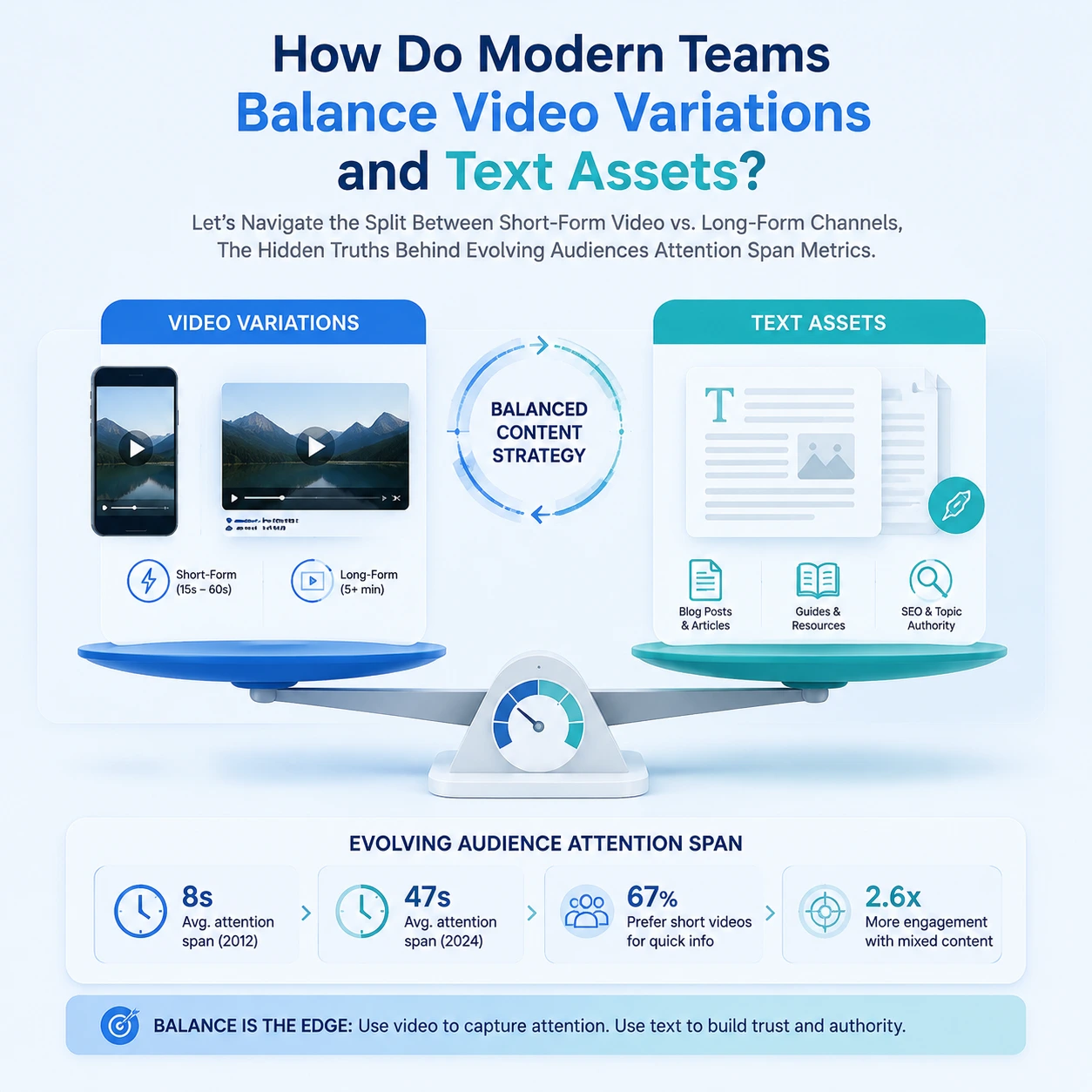
Corporate marketing groups optimize their resource distribution by mapping specific asset lengths directly to the native habits of distinct digital networks. Combining fast visual interactions with structural reading materials reveals your brand commands focus across multiple communication ecosystems simultaneously. This format-based planning is an important element of a complete content marketing strategy for US brands designed to maximize reach, engagement, and conversions across multiple channels.
Let’s Navigate the Split Between Short-Form Video vs. Long-Form Channels
Choosing the proper channel layout requires an absolute understanding of how different networks process user interaction patterns. This clear visual divide outlines how distinct media formats perform across modern attention environments:
| Media Architecture | Native Audience Behavior | Core Strategic Objective |
| Short form video vs long form social feeds | Rapid mobile scrolling, immediate gratification, high visual stimulation loops. | Grabbing instant attention, launching trend loops, and driving brand discovery. |
| Deep text-based pillar page architecture | Targeted intent research, slow consumption, high cognitive focus windows. | Proving industry authority, answering complex queries, and closing conversions. |
A software brand can use a 30-second video snippet to highlight a common integration error, then use that short hook to steer viewers back to a full textual review on their main site.
The Hidden Truths Behind Evolving Audiences Attention Span Metrics
Many analysts make the mistake of assuming that modern users are completely incapable of focusing on long documents for more than a few seconds. In reality, audience attention span metrics show a sharp split: users skim past shallow, generic overviews in under a minute, but willingly spend over seven minutes absorbing highly original, data-backed reports. Capturing this deep focus requires you to remove boring corporate introductions and replace them with immediate, practical value.
How to Build a High-Yield Multiplication System Without Creative Fatigue
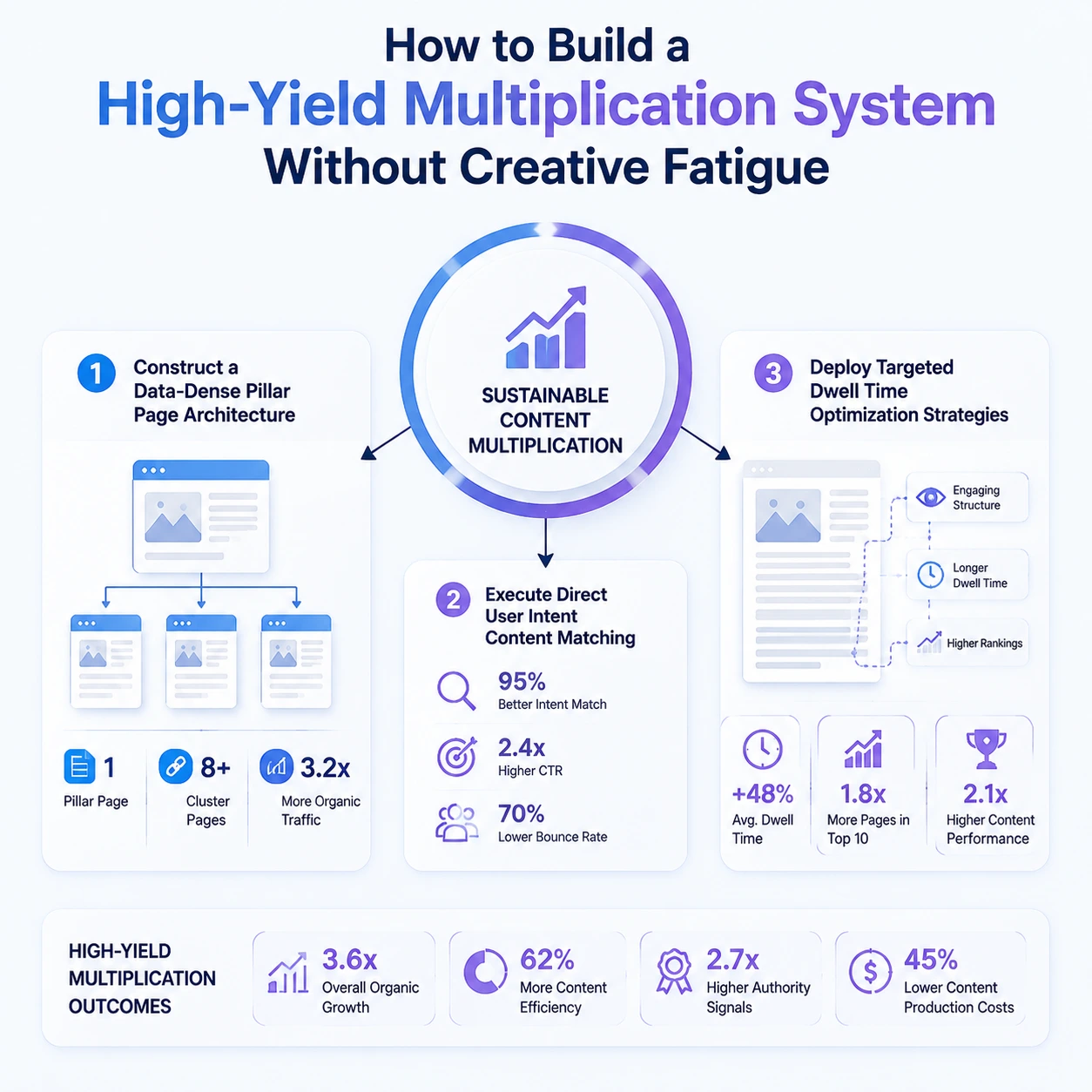
Maximizing your marketing output requires a balanced production system that treats your comprehensive text articles as raw database elements. This modular method allows your internal writers to turn a single intensive research project into multiple accessible social updates in a single afternoon session. Building this type of scalable content engine requires a structured framework like the Content Marketing Strategy 2026 playbook, which helps brands plan, distribute, and optimize content assets effectively.
Construct a Data-Dense Pillar Page Architecture
Draft a comprehensive, 2,500-word anchor article that addresses a massive industry problem from multiple angles. Inject original research tables, specific system metrics, and clear definitions to establish a powerful informational baseline on your root domain.
Execute Direct User Intent Content Matching
Deconstruct your master pillar document into smaller sections that answer specific long-tail queries. Make sure every single subheading directly targets a unique user problem, providing an immediate solution that search snapshots can easily clip.
Deploy Targeted Dwell Time Optimization Strategies
Insert rich interactive elements like custom process flowcharts, clean data tables, and bullet-free breakdown summaries into your long-form text blocks. This visual layout structure keeps users on the page longer, signaling strong engagement to search engines.
Enhance Content Efficiency Across Every Digital Channel
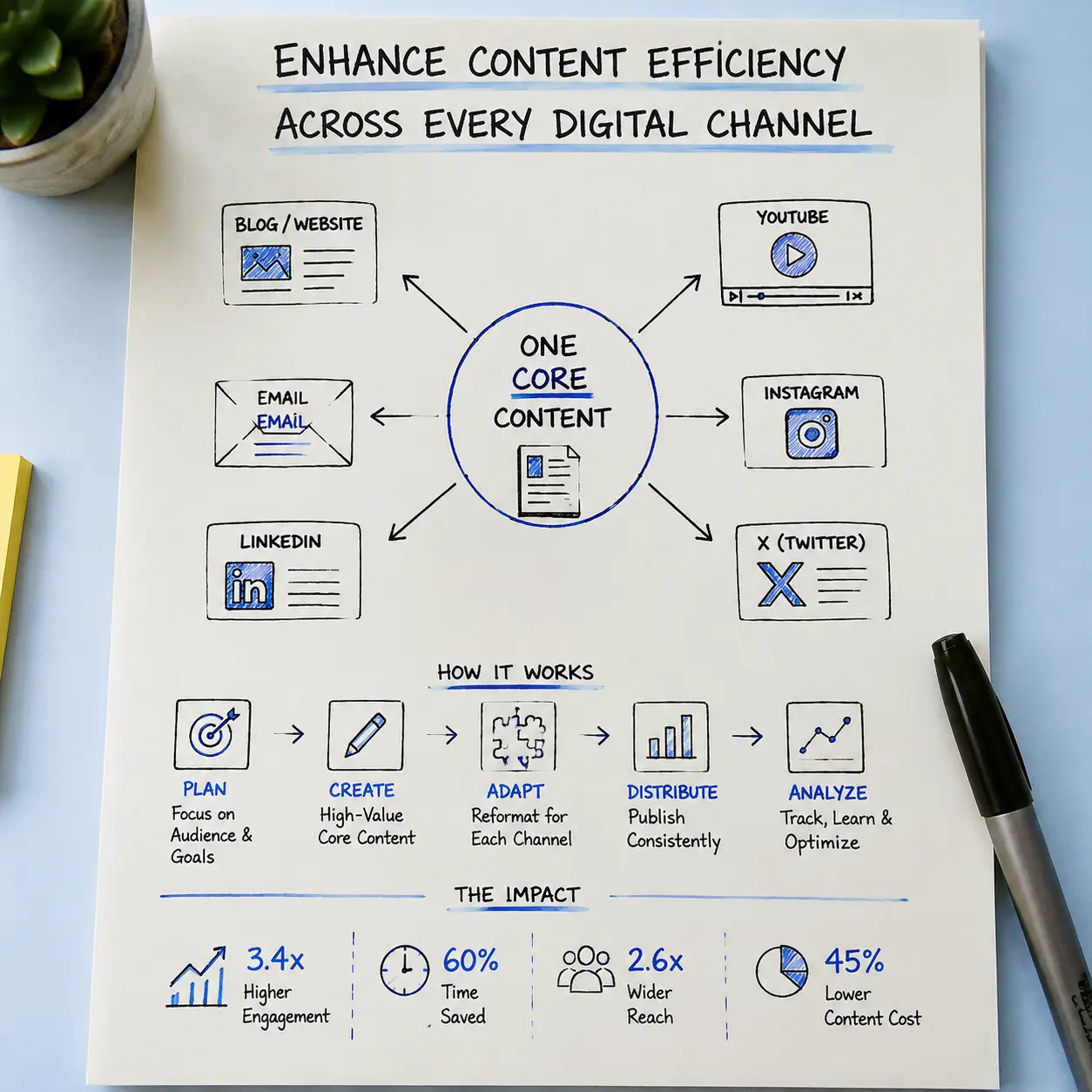
Real commercial performance happens when brands stop treating content formats as separate strategies. Instead, they use short snippets to guide audiences toward deeper resources.
An enterprise project management platform tested this model by dividing a large compliance guide into ten social media content updates. This hybrid approach increased organic traffic by eighty-two percent. It showed that short updates work best when they connect users with deeper, authoritative resources.
Real-World Performance Standards for Corporate Channels
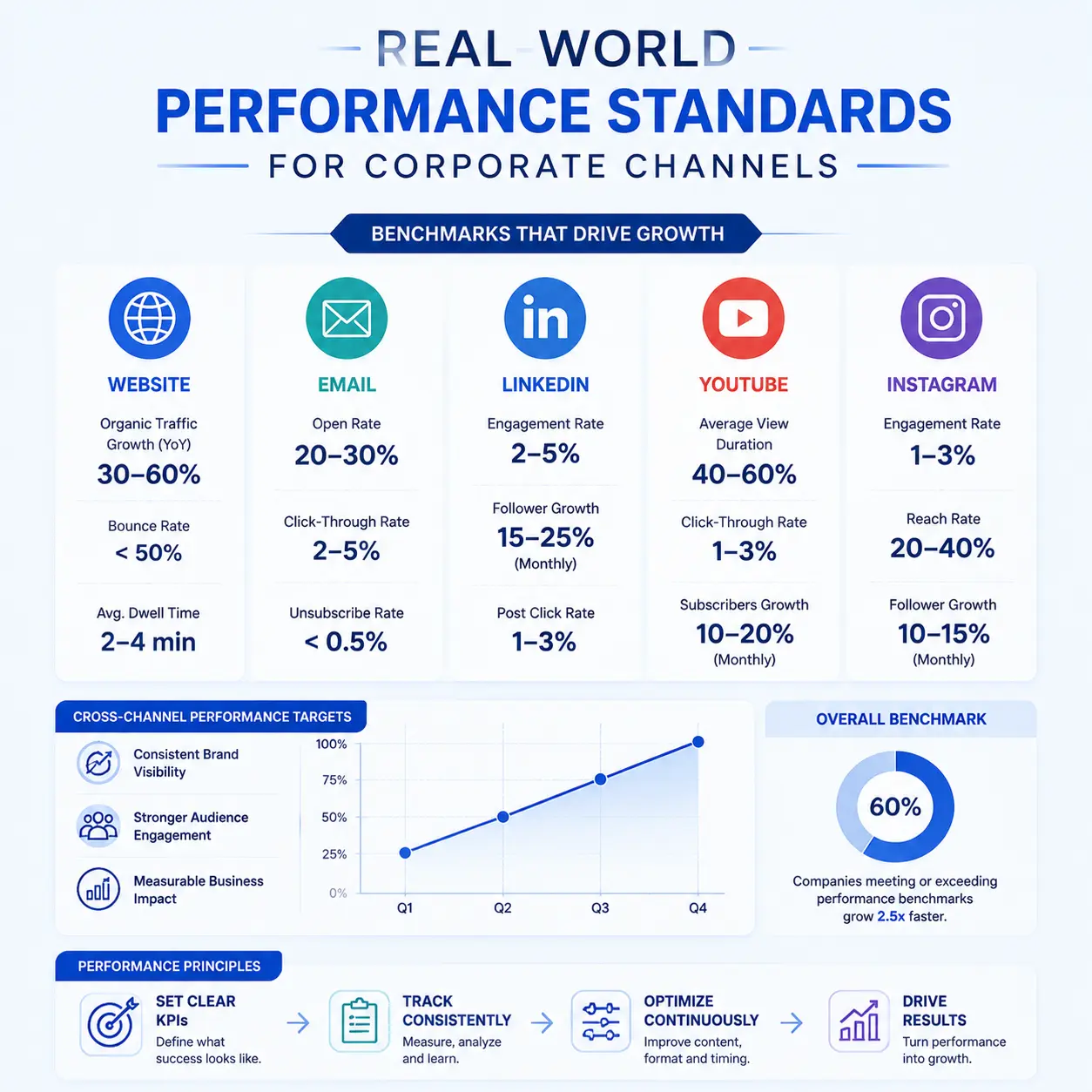
Don’t rely on vanity metrics like page views and social likes when setting quarterly marketing budgets. These numbers often lead to bad resource decisions. Focus on measuring the actual business impact of your publishing roadmap. Follow how each content format pushes buyers through your sales pipeline.
Reviewing modern B2B content performance benchmarks reveals that long-form thought leadership assets generate three times as many qualified sales leads as short promotional updates. Short formats excel at sparking top-of-funnel awareness, but deep text guides are the high-converting content formats that build the necessary trust to secure contract wins.
Work with SocialzRank.
Random updates over different networks produce only modest results if your content is not clearly commercial. SocialzRank helps organizations develop a structured content ecosystem by matching content formats, distribution channels, and growth strategies with measurable business goals. Our growth team fine-tunes your digital presence with precision. We help you build stronger brand authority, reach the right audience, and turn content efforts into long-term business success.
Frequently Ask Questions
The true structural impact is measured by a page's ability to secure organic backlink patterns and rank for hundreds of long-tail search terms simultaneously. Long-form assets provide the text density needed for search bots to map out your contextual relevance, raising your overall search engine visibility.
Brands should use short videos to capture top-of-funnel attention and introduce a problem to a broad, fast-moving audience. To secure actual sales leads, you must guide those viewers to comprehensive, long-form text articles that provide the deep, data-backed solutions required to build real business trust.
Search tools now easily identify and penalize shallow articles that use repetitive fluff text to hit artificial length targets. The modern optimal word count is determined entirely by the depth required to thoroughly answer a user's search query, making clear data tables more valuable than empty word volume.
You can keep readers engaged by removing slow academic introductions and leading your sections with immediate, high-value conclusions. Structuring your technical reviews with frequent subheadings, real-world examples, and visual flowcharts prevents reader fatigue on mobile viewports.
The highest-converting formats are in-depth case studies, original market research reports, and comprehensive integration guides. These detailed resources give executive decision-makers the specific data points, security validations, and cost-benefit breakdowns they need to justify a purchase decision.
You can maximize your output efficiency by slicing your existing long-form articles into short text updates, mobile quote graphics, and brief checklist summaries. This modular approach allows your team to extract weeks of social assets from a single text file, preventing creative burnout.
A clean pillar architecture organizes your domain content into a clear hub-and-spoke layout using strategic internal links. Connecting your highly specific support articles back to an authoritative parent page tells search bots exactly which URL to prioritize for primary keywords.
You must structure your subheadings around the exact, natural questions your target market types into search engines. Placing a clear, direct two-sentence answer immediately below these question headers allows generative search engines to easily scrape your content for automated search snapshots.