


Many enterprise marketing directors review their analytics dashboards and ask this exact question: “How often to post blogs?” when organic traffic begins to plateau. For 2026, the recommended baseline requires corporate websites to maintain an optimal blogging frequency of two to four high-quality articles per week to accelerate search indexing. This specific balance creates a steady stream of text data that establishes deep topical authority while keeping production budgets perfectly manageable.
Publishing without a clear, data-backed strategy can actually hurt your search engine rankings by creating duplicate content issues across your domain. A clean, predictable content posting schedule should always be part of a broader content marketing strategy for 2026 that aligns publishing frequency with business goals, audience needs, and search visibility.
What Is the Real Relationship Between Posting Speed and Organic Search Rankings?
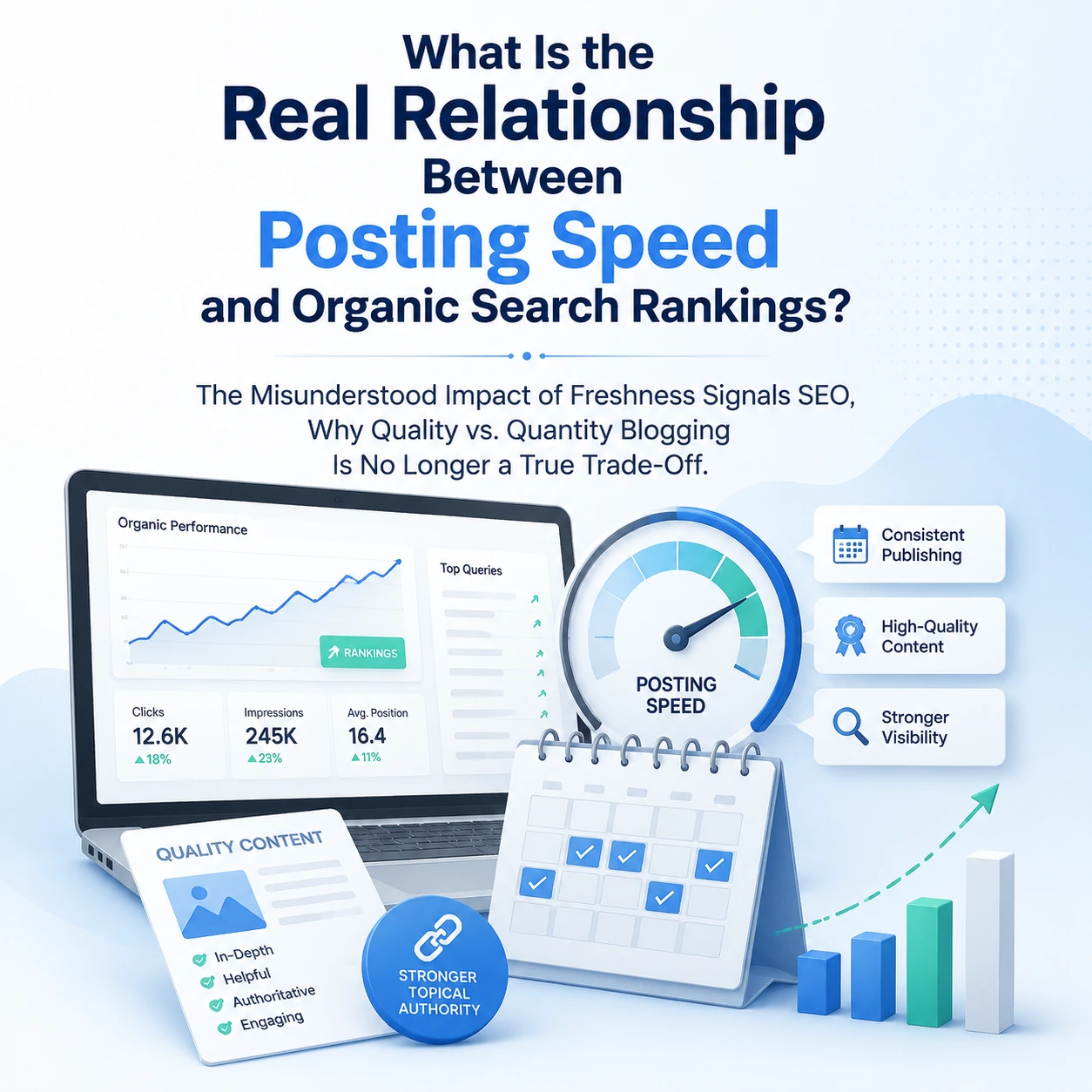
Contemporary search engine indexers measure the steady volume of new information your brand adds to its domain over a fixed period to judge market authority. Maintaining a high SEO content velocity proves to automated crawlers that your business actively monitors industry updates, which naturally elevates your baseline visibility across related keyword groups.
The Misunderstood Impact of Freshness Signals SEO
Search engines prioritize websites that regularly update their information systems with original data and unique market research. For example, a fintech software platform that updates its asset guides right after a major tax law shift will immediately jump ahead of older, static competitor articles. This lift happens because the system rewards active freshness signals SEO flags, redirecting high-intent traffic to domains that minimize information delay for the end user.
Why Quality vs. Quantity Blogging Is No Longer a True Trade-Off
Chasing raw publishing volume by using low-grade, automated text generators will quickly result in severe algorithmic penalties for your site. A successful approach to quality vs. quantity blogging requires teams to build deep, original resource guides that provide immediate, practical answers to complex problems. For instance, publishing one incredibly thorough case study filled with verified system data will always outperform ten shallow, repetitive fluff pieces that fail to satisfy search intent.
How Do Successful B2B Brands Structure Their Master Publishing Schedules?
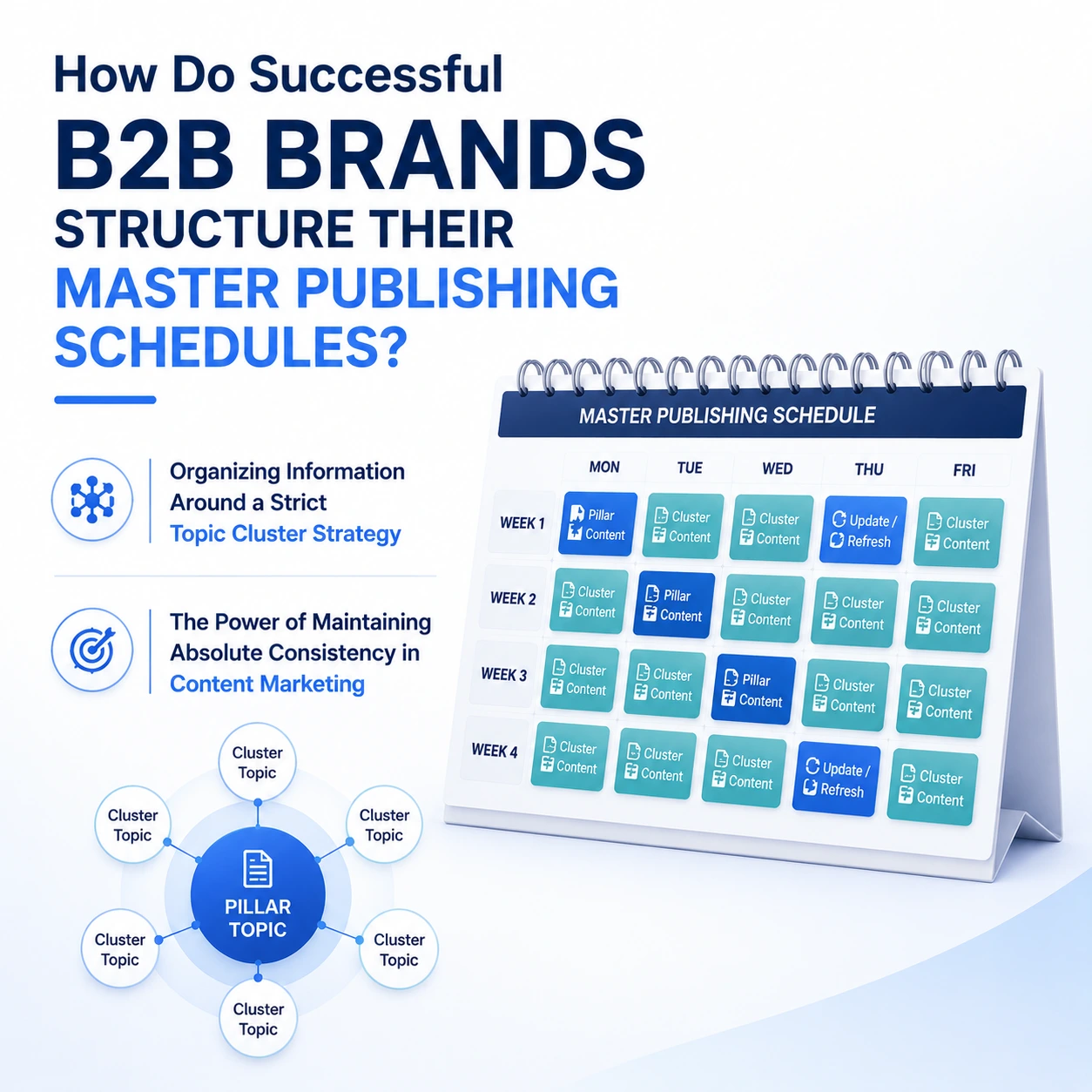
Leading enterprise channels determine their B2B blog publishing frequency based on their internal production capacity. They align content velocity with the size of their teams to maintain a consistent publishing schedule. A reliable workflow prevents creative burnout and ensures every asset receives proper editing and factual verification before going live.
Organizing Information Around a Strict Topic Cluster Strategy
True search dominance relies on building highly interconnected networks of deeply researched articles rather than publishing scattered, unrelated posts. A precise topic cluster strategy connects multiple highly specific support articles back to a central pillar resource through structured internal hyperlink paths. This approach is a key part of a successful Content Marketing Strategy 2026 guide, helping brands build topical authority and sustainable organic growth.
A cloud security brand, for example, can anchor a main landing page by linking it to distinct, deep-dive guides addressing encryption rules, remote workplace access, and firewall settings. This interconnected framework proves your deep expertise to search bots, raising rankings across your entire target network.
The Power of Maintaining Absolute Consistency in Content Marketing
Irregular publishing habits puzzle search engine bots and make it difficult for human readers to build a lasting connection with your brand. Committing to strict consistency in content marketing trains your target audience to expect your commentary on a predictable weekly rhythm. This disciplined operational consistency builds reliable user engagement metrics, signaling strong domain health to modern search assessment tools.
How to Scale Blog Traffic Without Damaging Existing Search Equity
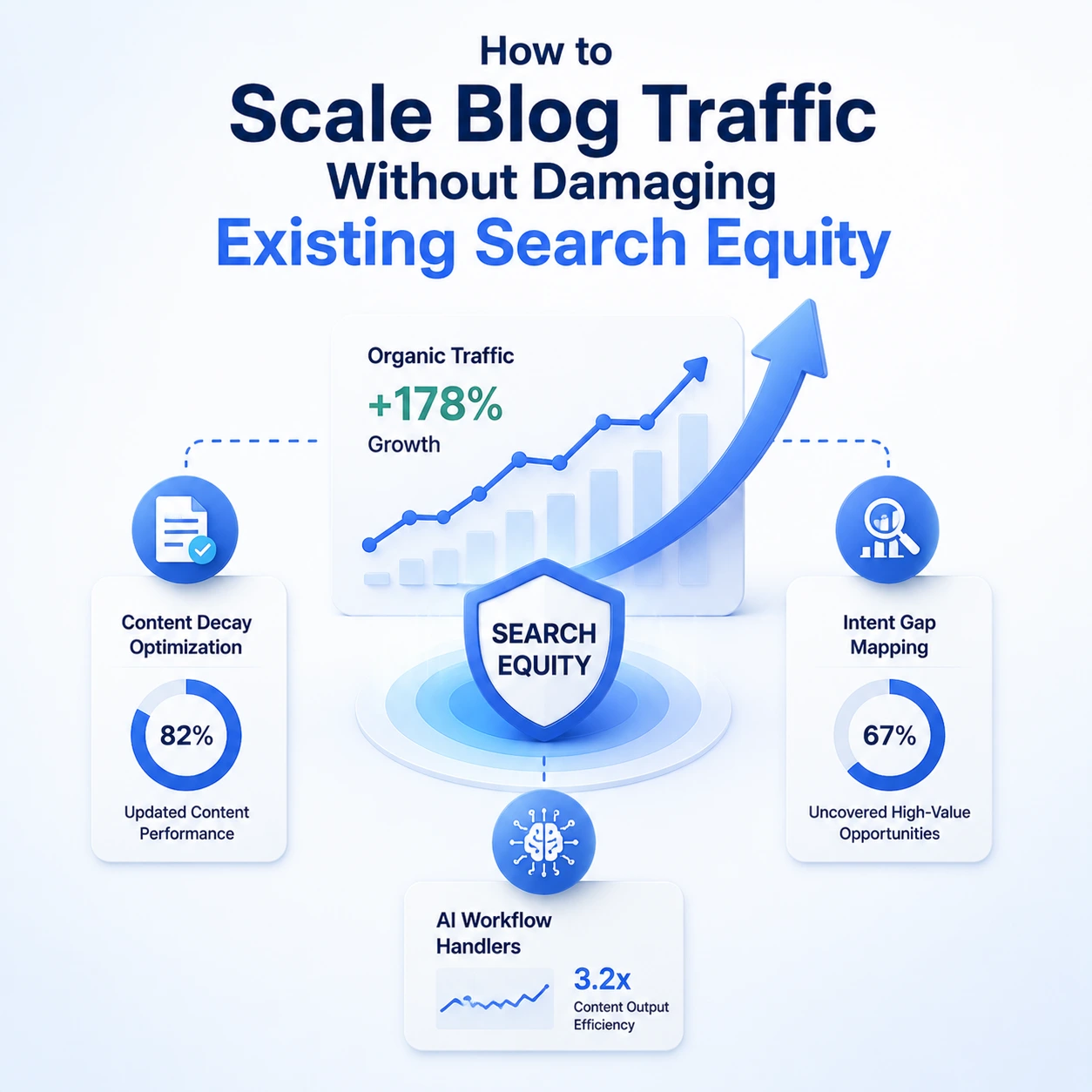
Scaling your monthly traffic footprint requires a balanced workflow. This approach combines the creation of new articles with regular updates to older domain URLs. It helps prevent traffic drops across historical landing pages while allowing new content visibility to build on your existing search equity.
1. Execute Systemic Content Decay Optimization
Audit your full site index every quarter to find older pages that are losing historical traffic. Update these declining URLs with fresh data tables, new section headers, and direct answers to modern search queries to restore their original keyword authority.
2. Map Hidden Intent Gaps via Competitive Analysis
Process active competitor rankings to locate high-intent user searches that your current resource archive misses. Use these semantic data gaps to build your next month of creative briefs, making sure every new title expands your overall keyword footprint.
3. Deploy Advanced AI Workflow Handlers
Connect your master strategy databases to free automation tools to handle early structural outlines and formatting steps. This optimization removes early production friction and streamlines the content workflow. It allows your core team to focus on adding unique human value and verified brand research.
The Strategic Balance: New Production vs. Asset Preservation
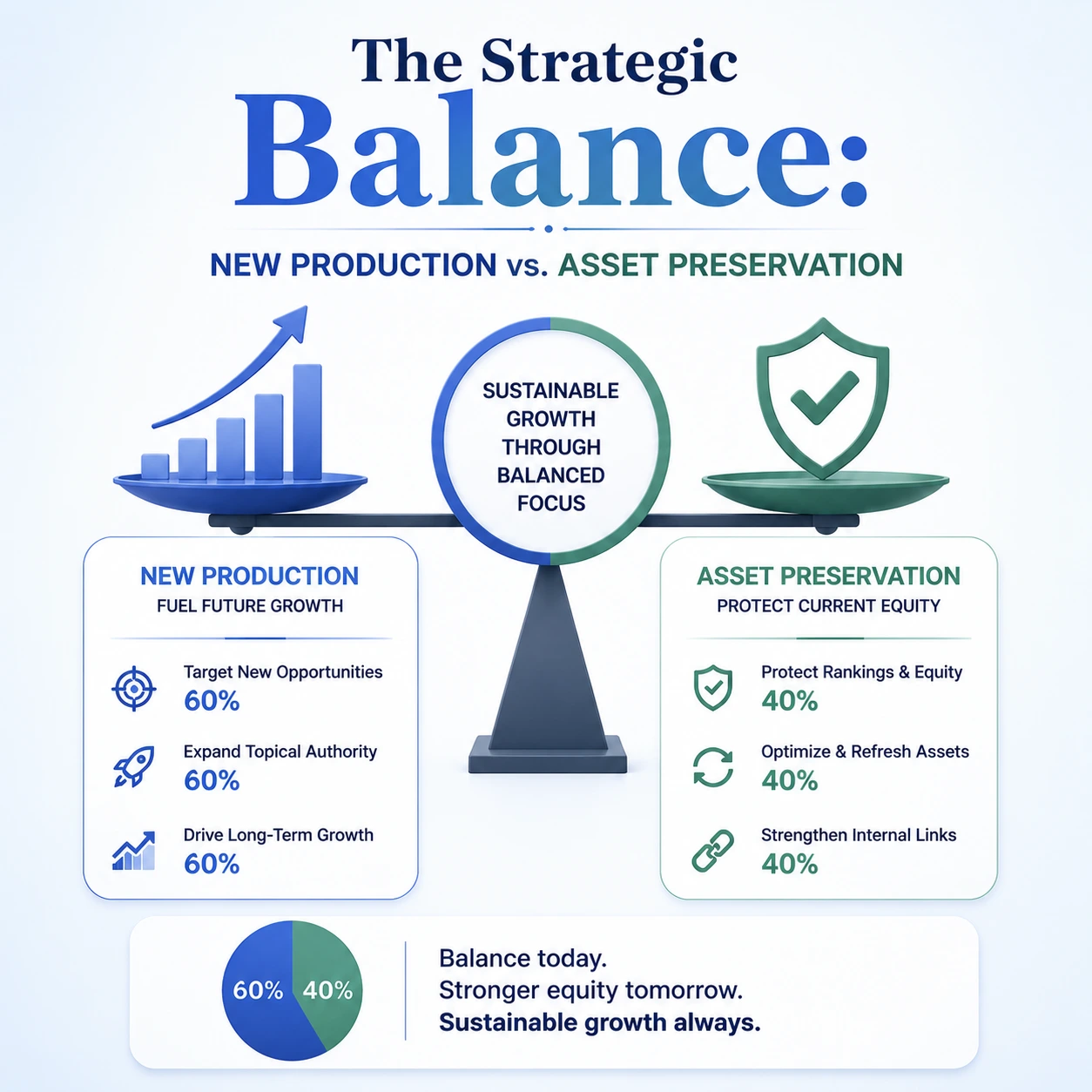
True growth occurs when digital marketing departments balance new content creation with existing asset updates. A strong strategy allocates around forty percent of the monthly production budget to improving older web assets.
An enterprise payroll platform proved this model by refreshing twenty legacy product guides. These updates generated a sixty percent lift in organic conversions at a fraction of the cost of creating brand-new articles. Protecting past research investments keeps domain metrics stable and provides a strong foundation for future growth campaigns.
Ready to Accelerate Traffic Velocity into Permanent Market Dominance
A consistent blogging schedule delivers the best results when combined with a complete framework covering research, planning, optimization, and distribution. A strategic approach to content creation helps brands build a scalable system that supports long-term organic growth. Learn more in our complete content marketing strategy guide for 2026.
Publishing text blocks onto your domain means absolutely nothing if your production schedule lacks a direct commercial destination. SocialzRank helps you take control of your publication roadmap and transform your marketing calendar into an aggressive customer acquisition machine. Our specialized growth squad coordinates your complete digital footprint with strategic precision. This approach builds strong brand authority and communicates your value directly to enterprise decision-makers.
Frequently Ask Questions
A disciplined schedule builds a massive, self-sustaining repository of educational resources that attracts high-intent organic visitors to your site without extra ad spend. This compounding traffic stream lowers your reliance on expensive paid conversion funnels, dropping your long-term customer acquisition costs.
Teams find their ideal rhythm by tracking their internal production velocity against the depth required to exhaustively cover target topics. For most business niches, publishing two high-density, original guides per week satisfies indexing requirements without risking a drop in quality.
An advanced cluster architecture connects multiple specific sub-topic guides back to an authoritative parent pillar landing page using strict internal hyperlinks. This structured layout maps out your domain topic authority for search bots, raising your search engine rankings across highly competitive keyword groups.
Search indexers monitor how regularly a page updates its text data, historical facts, and external resource links. Adding updated research tables or resolving shifting search intents re-triggers crawling scripts, showing search bots that your content remains highly accurate and relevant.
Traffic drops happen when organizations focus entirely on launching new keyword campaigns while leaving older, high-performing articles to rot in the archive. Neglecting these historical pages allows competitors to capture your keywords with fresher data, hurting your overall domain authority.
Small teams scale their reach by using free advanced AI engines to automate initial research and outline steps. Saving hours on early planning allows your core writers to dedicate their energy to adding unique insights and real-world examples, maximizing your content velocity.
The winner is decided by user intent satisfaction metrics like time-on-page and bounce rates rather than simple word counts or daily publishing volumes. A single piece of comprehensive, data-backed writing will always rank higher than multiple low-value posts that leave user questions unanswered.
Steady publishing habits create a predictable flow of deep industry data that search engine web crawlers index on a recurring basis. This reliable indexing cadence ensures your new insights are scanned immediately, allowing your domain to capture fresh search snapshots ahead of inconsistent competitors.