

Boring blog introductions are silent revenue killers that destroy your organic search rankings. To write a blog intro that hooks readers instantly, state the core value proposition in the very first sentence, agitate a specific pain point, and deliver an immediate answer before asking for scrolling commitment.
If your opening paragraph wastes space with fluff like “In today’s fast-paced digital world,” your bounce rate soars. Readers want immediate answers, not history lessons. This expert guide breaks down how blog introductions are only one part of a successful content marketing strategy for 2026; US brands also need a structured approach to content planning, search intent, distribution, and conversion. Tested formulas, real-world examples, and psychological hooks to hold reader attention and drive organic rankings.
The Calculated Math Behind the Three-Second Bounce
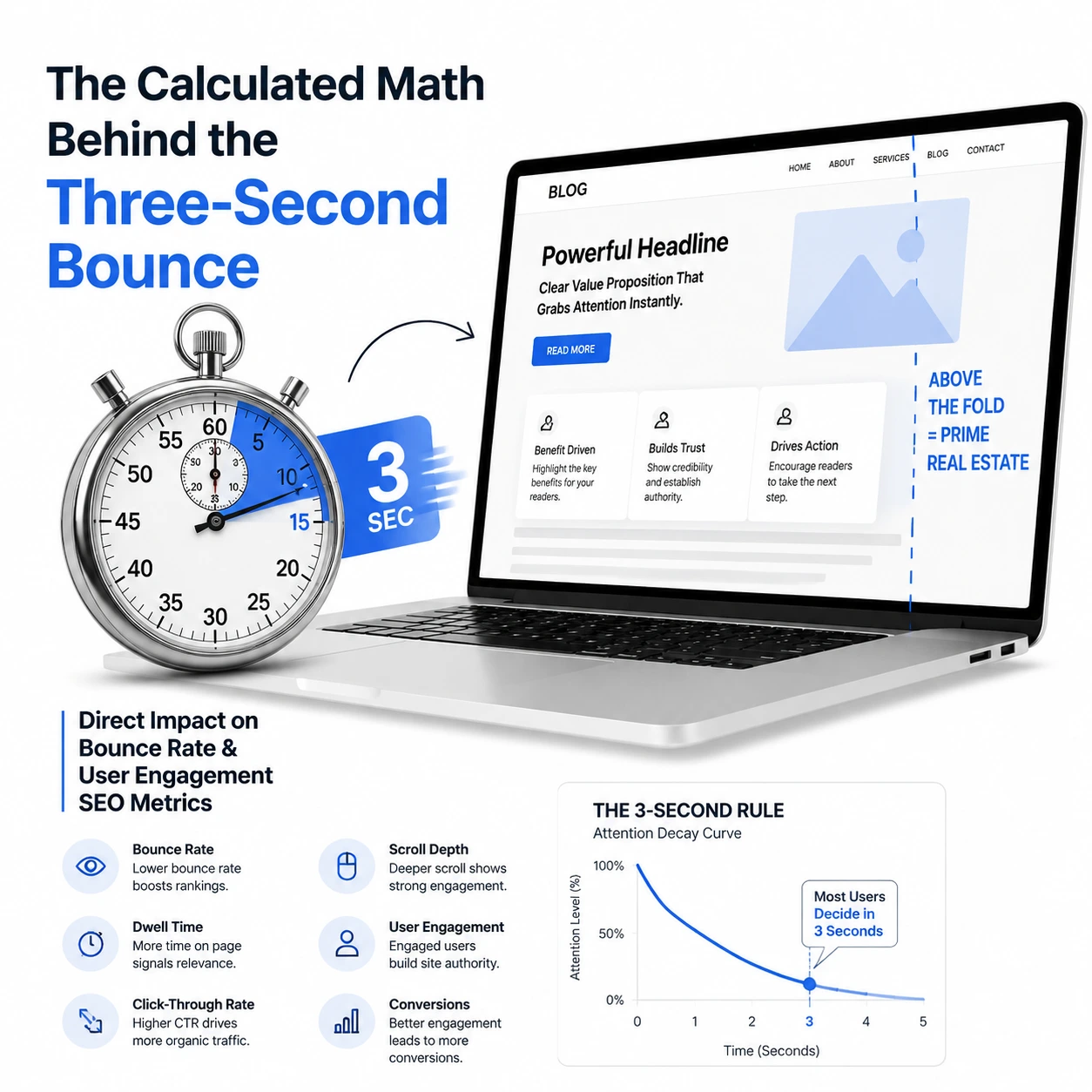
Most web traffic bounces within three seconds because the opening text fails to reassure the reader that they arrived at the correct destination. Searchers arrive with high intent and zero patience, making your opening lines the make-or-break moment for user retention.
Winning Real Estate via Above-the- Fold Content Optimization
Above-the-fold content optimization requires placing your primary answer, main keyword context, and core hook on the visible screen space without requiring a single scroll. If a user lands on your page and sees a giant hero image, three ads, and a vague intro sentence, they leave immediately. Structuring your top section so the reader immediately sees bold, direct value builds instant trust and stops back-button exits.
Direct Impact on Bounce Rate and User Engagement SEO Metrics
Search engines closely track user engagement SEO metrics like dwell time, click-through rates, and scroll depth to determine whether your page actually satisfies search intent. When a user clicks your link, reads for two seconds, and bounces back to the search results page, search algorithms log a negative quality signal. Consistently keeping readers on your page for long sessions by using punchy, high-retention openings directly improves your keyword rankings.
Battle-Tested Blog Post Opening Formulas
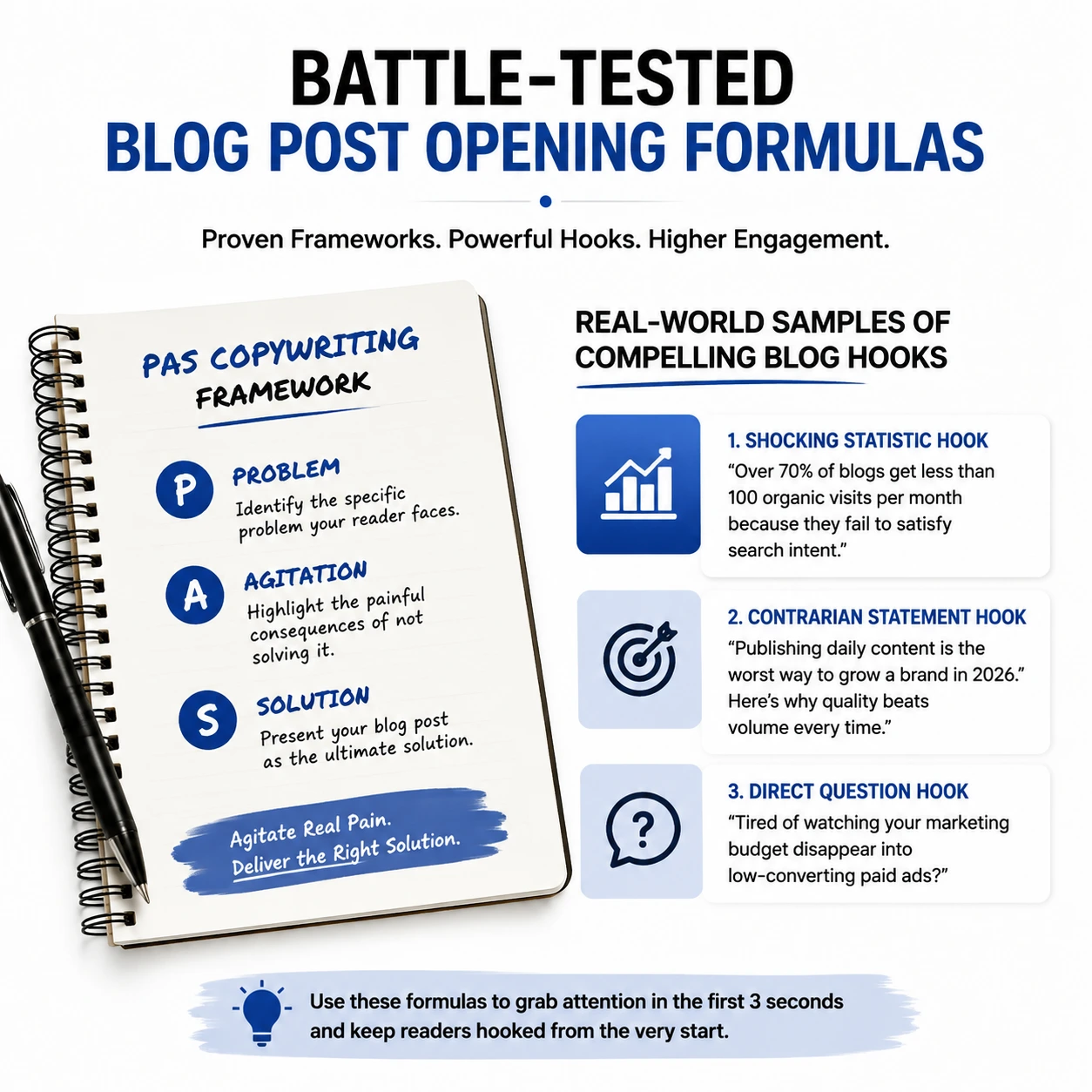
Relying on random inspiration to write your intro leads to weak openings, while structured copywriting formulas guarantee high conversion and reader interest every time. Using proven templates takes the guesswork out of content creation and streamlines your writing workflow.
Agitate Real Pain via PAS Copywriting Framework Blog Mechanics
The PAS copywriting framework blog structure stands for Problem, Agitation, and Solution, a psychological sequence designed to trigger immediate reader interest. First, state the specific problem your reader faces. Next, agitate that problem by highlighting the frustrating consequences of leaving it unresolved. Finally, introduce your blog post as the definitive solution.
PAS Intro Template:
Problem: Most digital marketers struggle to drive consistent traffic from social media.
Agitation: You spend hours writing posts, designing graphics, and scheduling content, only to end up with double-digit impressions and zero leads.
Solution: This guide reveals five proven distribution tactics to instantly expand your brand reach and double your click-through rates.
Real-World Samples of Compelling Blog Hooks
Mastering compelling blog hooks requires picking the right psychological angle for your specific audience. Here are three distinct hook styles you can use immediately:
The Shocking Statistic Hook: Lead with a surprising, verified data point that challenges common assumptions.
Example: “Over seventy percent of corporate blogs generate less than one hundred organic visits per month because they fail to satisfy search intent.”
The Contrarian Statement Hook: Attack a common piece of industry advice directly.
Example: “Publishing daily content is the worst way to grow a brand in 2026. Here is why quality beats volume every time.”
The Direct Question Hook: Ask a targeted question that highlights a painful problem your reader is actively trying to solve.
Example: “Tired of watching your marketing budget disappear into low-converting paid ads?”
Kill the Fluff and Feed Search Intent Fast
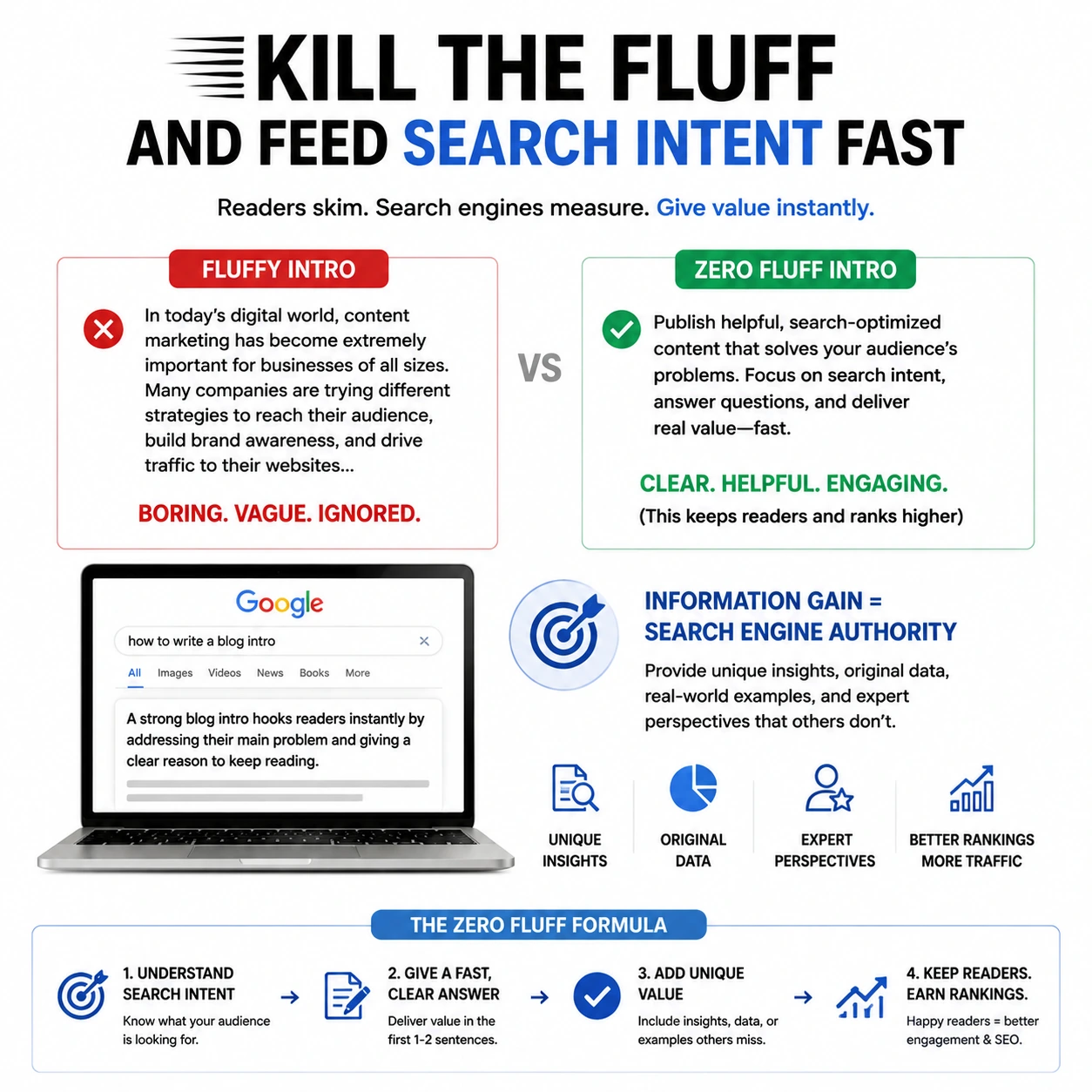
Modern online readers skim text rapidly to locate specific information, ignoring fluff and corporate filler completely. Delivering fast value builds instant trust and authority with your audience.
Fast Answers with the Zero Fluff Intro Formula
The zero fluff intro formula strips away background history and gets straight to the core answer in two sentences or less. Never start an article by explaining what the topic is in broad terms; start by telling the reader how to solve their problem. For example, instead of explaining “what email marketing is,” open directly with “The most effective way to grow your email open rate is clean list segmentation and personalized subject lines.”
Search Engine Authority via Information Gain SEO Strategy
Applying an information-gain SEO strategy means providing unique data, expert perspectives, or proprietary frameworks that competing articles miss. Search algorithms favor content that offers fresh insights over pages that rehash identical web content. Injecting direct experience, real-world case studies, or bold opinions into your opening paragraph signals to search engines that your article offers superior value. This information-gain approach should be built into your broader content marketing strategy, from topic selection and content briefs to internal linking and distribution.
Direct Breakdown of Engaging Intro Paragraph Examples
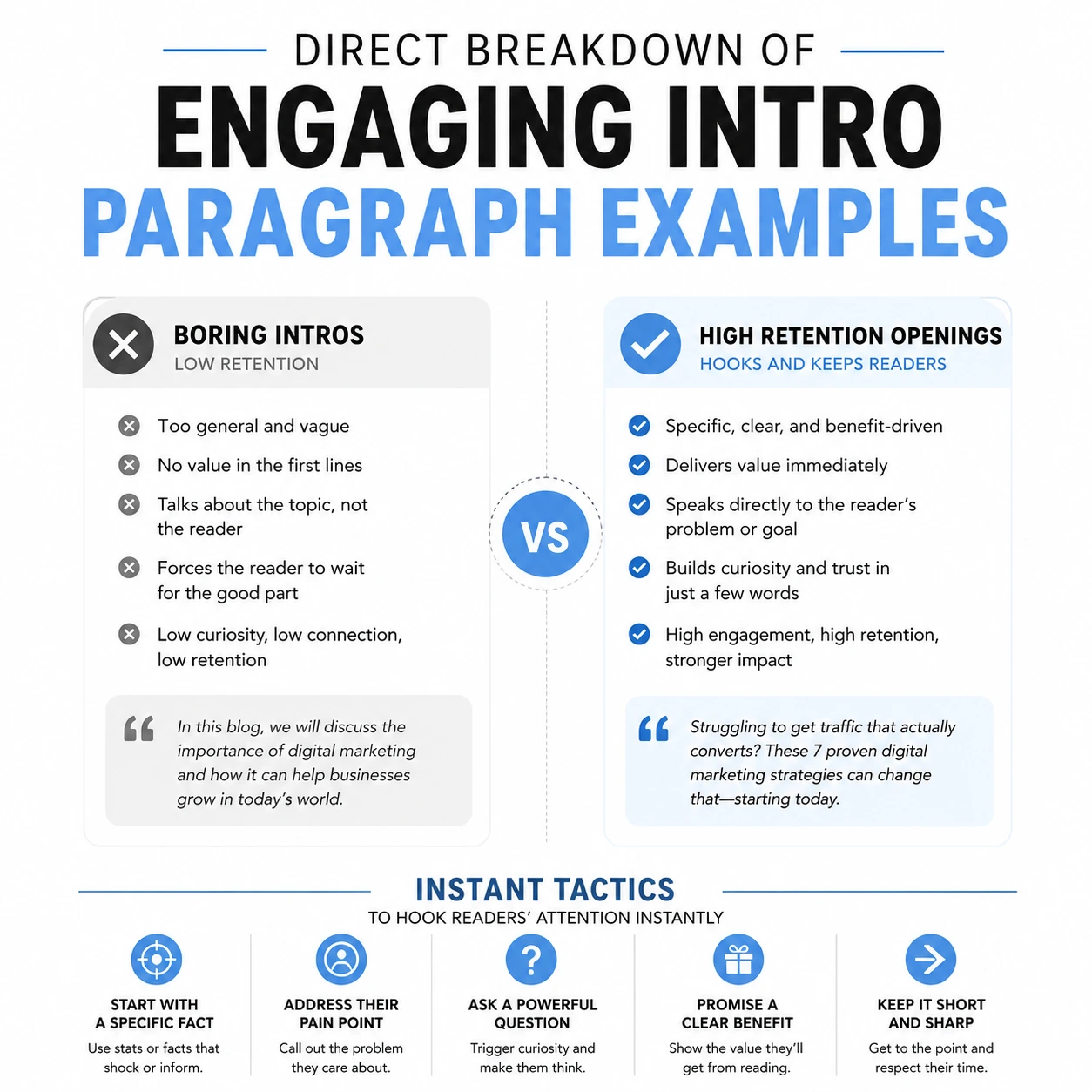
Analyzing the contrast between bad and good introductions makes it easy to spot passive filler in your own drafts. Removing weak openings transforms average articles into high-converting organic search assets.
Boring Intros Versus High Retention Openings
A boring introduction uses passive language, generic statements, and zero emotional triggers, driving readers away instantly. Compare these two openings on the same topic:
Weak Opening: “Social media marketing is very important for businesses today. Many brands use platforms like Instagram and LinkedIn to connect with customers. In this article, we will discuss how to improve your social media presence.”
High Retention Opening: “Managing social accounts without an active growth strategy drains your marketing budget and yields zero qualified leads. If your reach has stalled despite posting daily, you need a system reset. Here are four data-backed tactics to scale your social audience fast.”
Instant Tactics to Hook readers’ attention instantly
To hook readers’ attention instantly, use short sentences, bold key takeaways, and eliminate long passive phrases from your opening paragraph. Keep your first sentence under twelve words to create visual momentum that encourages scrolling. Breaking up dense text walls with punchy statements draws the reader down the page effortlessly.
Scale Your Brand Reach with SocialzRank
Writing high-converting intros is only half the battle; getting your content in front of a massive, engaged audience is where real growth happens. At SocialzRank, we help brands, creators, and marketers scale their online presence, boost organic signals, and dominate social algorithms with real, high-impact engagement solutions. Stop publishing into the void. Let SocialzRank amplify your content, elevate your rankings, and turn quiet channels into brand engines today.
Frequently Ask Questions
A high-converting blog introduction should be between 50 and 125 words spread across two to three short paragraphs. Keeping your opening lean ensures your content loads cleanly above the fold and delivers fast value before the reader loses interest.
Above the fold optimization ensures readers see immediate, direct value without scrolling. If a searcher lands on your page and sees giant decorative headers or generic filler text instead of answers, they bounce back to search results immediately.
The PAS framework works because it taps directly into user psychology by identifying a real problem, agitating the frustration it causes, and presenting your article as the immediate solution. This sequence reassures the reader that your content addresses their exact needs.
An information gain strategy adds unique value, unique data, or personal expertise that competing search results lack. Search engines reward content that offers new perspectives rather than pages that repeat generic information available elsewhere.
User engagement metrics include dwell time, bounce rate, scroll depth, and session duration. A compelling, zero-fluff introduction keeps readers on the page longer, sending positive user signals to search algorithms that improve organic rankings.
The most common mistake is writing long historical introductions or defining basic concepts the searcher already understands. Readers want direct answers to their specific queries, not broad background overviews.
Yes, using a targeted question works well if it highlights a specific pain point or counters a common belief. Avoid vague questions like "Have you ever wanted to grow your business?" and use specific prompts like "Struggling to convert social traffic into real revenue?"
Studying high-retention examples gives writers clear visual patterns for structuring hooks, placing key takeaways early, and cutting passive voice. Using proven templates speeds up writing while keeping content quality consistently high.